

Democrats plan to force United States President Donald Trump to end the war on Iran as early as December although there’s worry their approach could trigger a government shutdown and pile on to soaring food and petrol prices.
Before this month’s midterm elections, the party promised to end the conflict, and its antiwar stance contributed to its sweeping wins at the polls as public anger has grown over the war.
Recommended Stories
list of 4 items
- list 1 of 4Bessent confirms he’s living on US military base over Iran fears
- list 2 of 4Trump claims Iran is developing bioweapons: Is there any evidence?
- list 3 of 4US midterms 2026: What happens before the new Congress takes office?
- list 4 of 4Iran says held talks with Qatari mediators, urges US to accept conditions
end of list
After Democrats flipped multiple seats, including in deeply Republican strongholds, and seized majorities in both the Senate and House of Representatives, many lawmakers said they would refuse to pass new war appropriations once they take control of both chambers on January 3.
However, some in the party are preparing to use the “power of the purse” to stop US attacks even before the new Congress begins its work. They are eyeing a December 11 deadline by which Congress must pass a critical bill to extend funding for some federal agencies.
Here’s what we know:

What have Democratic senators said about ending the war?
Democrats have already tried multiple times through resolutions to end the US-Israel war on Iran without success.
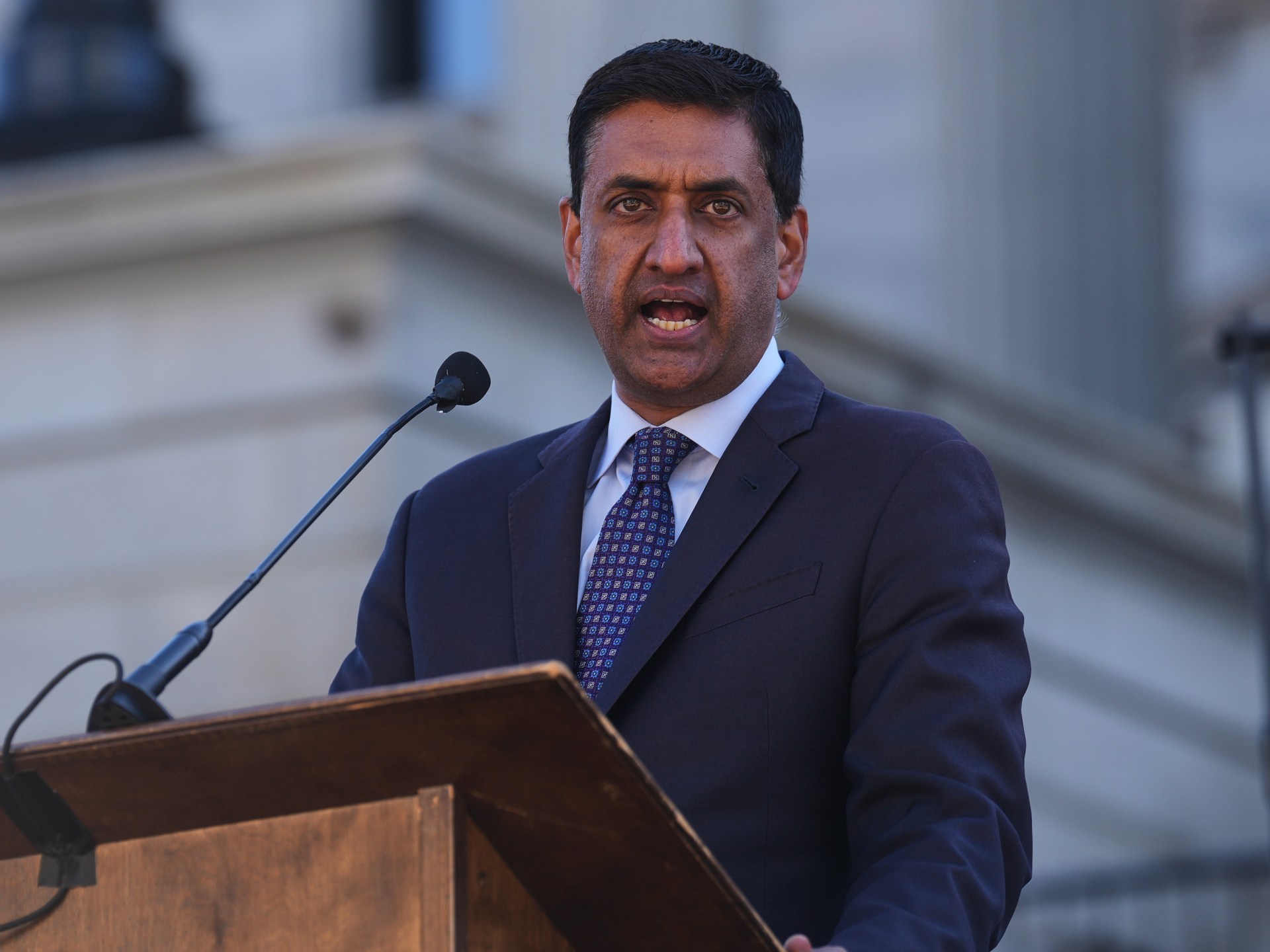
In a joint statement last week, Representatives Yassamin Ansari and Ro Khanna called on Democratic lawmakers to leverage a funding deadline to ensure “not another cent of taxpayer money” goes to prolonging the conflict.
They were referring to a continuing funding package that Congress must deliberate on and pass by December 11. The package is meant to maintain government operations across defence and other sectors. The representatives said Congress should “oppose any funding package that does not explicitly prohibit funds from being used for offensive operations” in Iran.
Advertisement
Failure to pass the package would halt funding for federal agencies and trigger a government shutdown from December 12.
“The American people were loud and clear on November 3rd: they want an immediate end to Donald Trump’s reckless war in Iran,” they wrote in the open statement to their colleagues. “Passing such a measure would defy the demands of Americans who want this war to end – now.”
In an accompanying video, Khanna recalled that Congress ended the Vietnam War using the same approach.
Senator Chris Van Hollen, who is gunning for the Senate majority leader position in the new Congress, also said in a statement last week that any bills passed “must include language that restricts the Trump Administration from using appropriated funds to continue his war against Iran”.
Senators Tammy Duckworth, Michael Bennet and independent Bernie Sanders also signed the statement.
Did lawmakers force the end of the Vietnam War?
Indirectly, yes, by cutting off US financial support.
The 1955-1972 war was between communist North Vietnam and South Vietnam. The US supported the South and initially sent only military advisers and aid.
In 1964, a US Navy contingent positioned in the Gulf of Tonkin alleged direct attacks by North Vietnam. Congress thereafter passed a resolution granting President Lyndon B Johnson power to send troops without declaring war. The US deployed more than 500,000 soldiers and launched a scorched-earth bombardment.
But as the conflict dragged on and morale among US soldiers began to suffer amid high casualties, the war grew unpopular. Reports of US Army atrocities, including mass rape and massacres, further dampened public support. Congress repealed the Gulf of Tonkin Resolution in 1973 and ordered US forces to withdraw.
President Richard Nixon’s administration began handing over US military authority to South Vietnamese forces, but it also continued bombardments.
In June 1973, Congress passed the Case-Church Amendment, which forbade approved federal funding from going directly or indirectly to the war. More than two-thirds of lawmakers in both chambers supported it, meaning Nixon could not override it with a presidential veto.
Lawmakers also passed the War Powers Resolution (or War Powers Act), which mandated that the president seek congressional approval before declaring war except in emergencies. Nixon vetoed it, but Congress overrode his veto in November 1973.
With US funding cut off, South Vietnam’s government in Saigon eventually fell in April 1975.
Are all Democrats willing to cut government funding?
The Trump administration irked Democrats when it failed to seek approval to declare war on Iran, a power that is constitutionally vested in Congress.
Advertisement
But not all Democrats support a government shutdown to end the war.
Democratic Representative Rosa DeLauro, who in the new Congress will chair the influential House Appropriations Committee, which can block funding, told CBS News before the midterms that she would support “cutting off the funds” for the war.
However, she has not backed a shutdown and said she would rather approve a short-term funding extension rather than a funding package meant to run for a year.
“I think that the American people would like to see us end the war,” she told reporters on Wednesday. “I also believe that the American people may not believe that shutting the government down ends the war.”
House Democratic leader Hakeem Jeffries, who is likely to become speaker of the House in January, as well as Senate Minority Leader Chuck Schumer, have not yet taken a stance.
Can the president use his veto power?
Yes, because Republicans still control Congress for another six weeks and Democrats, in the current Congress and the next, do not have the two-thirds majority required to override a presidential veto.
The two-thirds supermajority in the Senate requires 67 votes when all 100 senators participate. Even in the new Congress, in which Democrats will have a 56-44 majority, they will be 11 votes short.
Likewise, a two-thirds majority in the 435-member House requires 290 votes, but Democrats have secured 257 seats there in the next Congress.
In recent months despite not holding a majority, Democrats have forced more than 15 war powers votes in both chambers but have failed to pass them.
In September, seven House Republicans did vote with the Democrats in a bid to rebuke Trump, and the resolution passed 220-204.
However, Senate Republicans blocked it in a 51-48 vote last week.
Republicans, while admitting the high costs of the war, have argued the US needs to “finish the job”.
Related News
Iran threatens to ‘rain down hell’ if US escalates war

Serbia arrests police chief over abuse of office allegations

‘Groundbreaking’ Trump-Xi-Putin summit: Five key takeaways