
Danish top court’s ‘ghetto law’ ruling supports hardline immigration policy
 23 November 2026
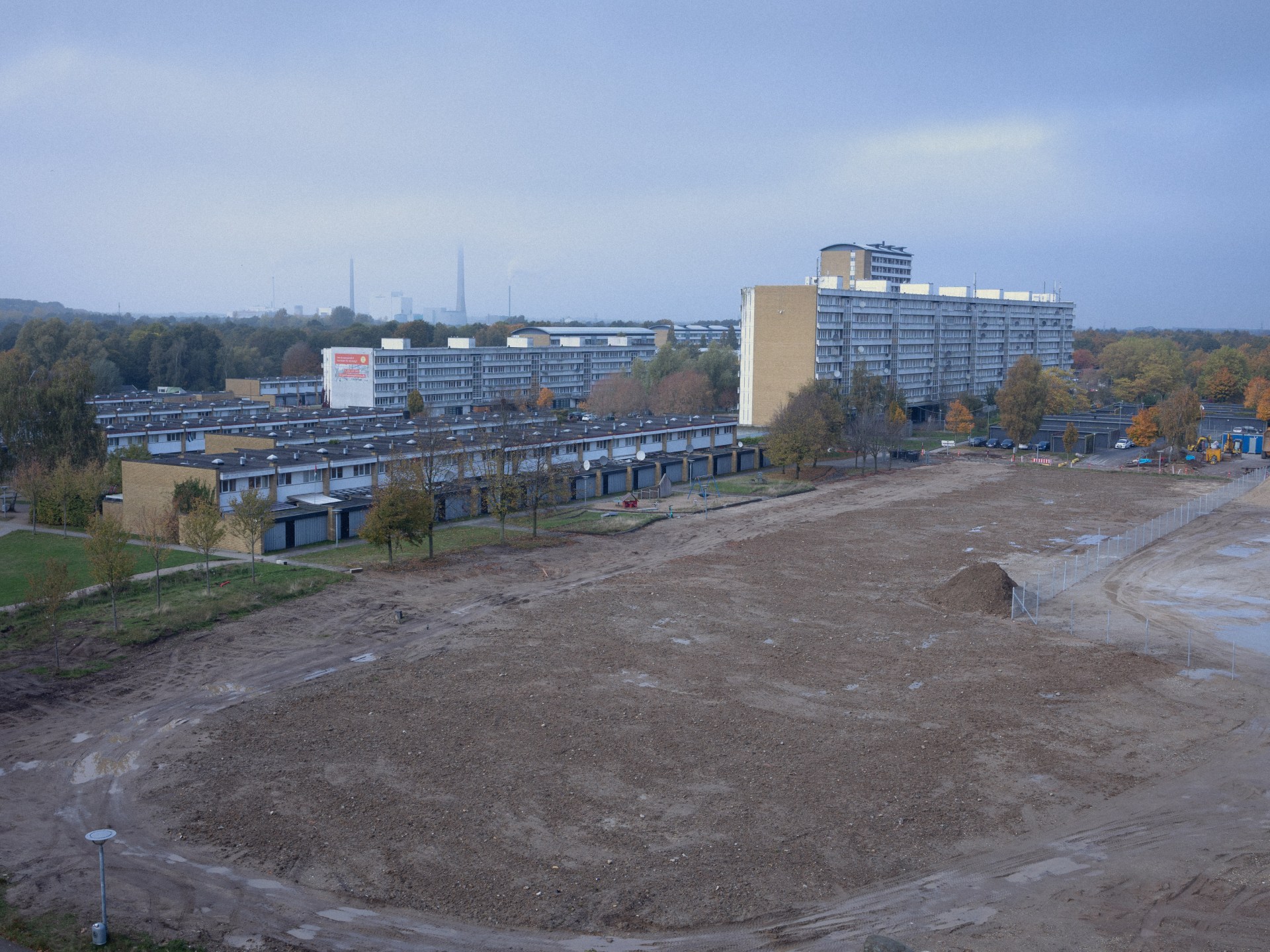

Denmark’s top court has ruled that the eviction of “non-Western” tenants from a social housing estate under the country’s “ghetto law” was not discriminatory.
The Supreme Court on Monday rejected an appeal by seven families, after lower courts had dismissed their legal suits against the termination of their leases by landlord Boliggarden in 2022 on the basis that they had been discriminated against based on ethnic origin. The ruling backs Denmark’s tough stance on immigration.
Recommended Stories
list of 2 items
- list 1 of 2Why is Denmark separating ‘Western’ and ‘non-Western’ citizens?
- list 2 of 2Inside the fight against Denmark’s ‘straight up racist’ housing law
end of list
The country’s “ghetto law” housing legislation, adopted in 2018, allows for the relocation of residents from areas in which more than half of residents are “non-Western”.
It requires social housing estates to change the social mix by renting at least 60 percent of homes at market rates by 2030. The government has described the legislation as a bid to promote integration.
The seven families were among 91 that had their leases terminated in Helsingor, north of Copenhagen, most of them “non-Western”.
A lower court found in 2022 that the law’s criterion of “immigrants and descendants from non-Western countries” is neutral and not a measure of ethnic origin.
The Supreme Court on Monday upheld that, ruling “that applying the criterion of the law involves dividing people into two groups (people who are immigrants and descendants from non-Western countries, and all other persons)”.
“Both groups include a very large majority of different ethnic origins, and there will simultaneously be persons with the same ethnic origin in both groups.”
Advertisement
The judges also noted that there had been “no information about the ethnic background of the residents who have been evicted”.
It therefore concluded that “the category ‘immigrants and descendants from non-Western countries’ provided for in the social housing law must be regarded as a neutral criterion and not as a criterion relating to ethnic origin”.
“We’re obviously disappointed,” one of the plaintiffs, Riad, told AFP.
‘Parallel societies’
Denmark has pursued a tough line on immigration for more than three decades.
The 2018 “ghetto law” is aimed at combatting segregation and “parallel societies” in disadvantaged neighbourhoods, according to the government. It has been widely criticised by tenants and tenants’ associations but has broad political support.
“Non-Western” is one criterion the Danish government uses to define “transformation areas”, which it previously termed “hard ghettos”.
According to Statistics Denmark’s definition, “non-Western” countries include every country in the world except the 27 member states of the European Union, as well as Andorra, Britain, Iceland, Liechtenstein, Monaco, Norway, Northern Ireland, San Marino, Switzerland, the Vatican, Canada, the United States, Australia and New Zealand.
Housing Minister Jacob Mark said in a statement that he was satisfied with the Supreme Court decision, reiterating the assertion that the law “strengthens security, social cohesion, and integration”.
Nonprofit housing accommodates more than one million people in Denmark and is open to all. Under the 2018 legislation, however, some 11,000 people will be forced to leave their apartments to be rehoused elsewhere by 2030, according to tenants’ associations.
The European Union’s top court ruled last year that the law could amount to ethnic discrimination.
Related News

Sixty Christians killed in Ethiopia’s Oromia region

APEC Live: Trump, Xi and Putin to meet in historic three-way China summit

Australia tightens AI oversight rules after OpenAI government breach