
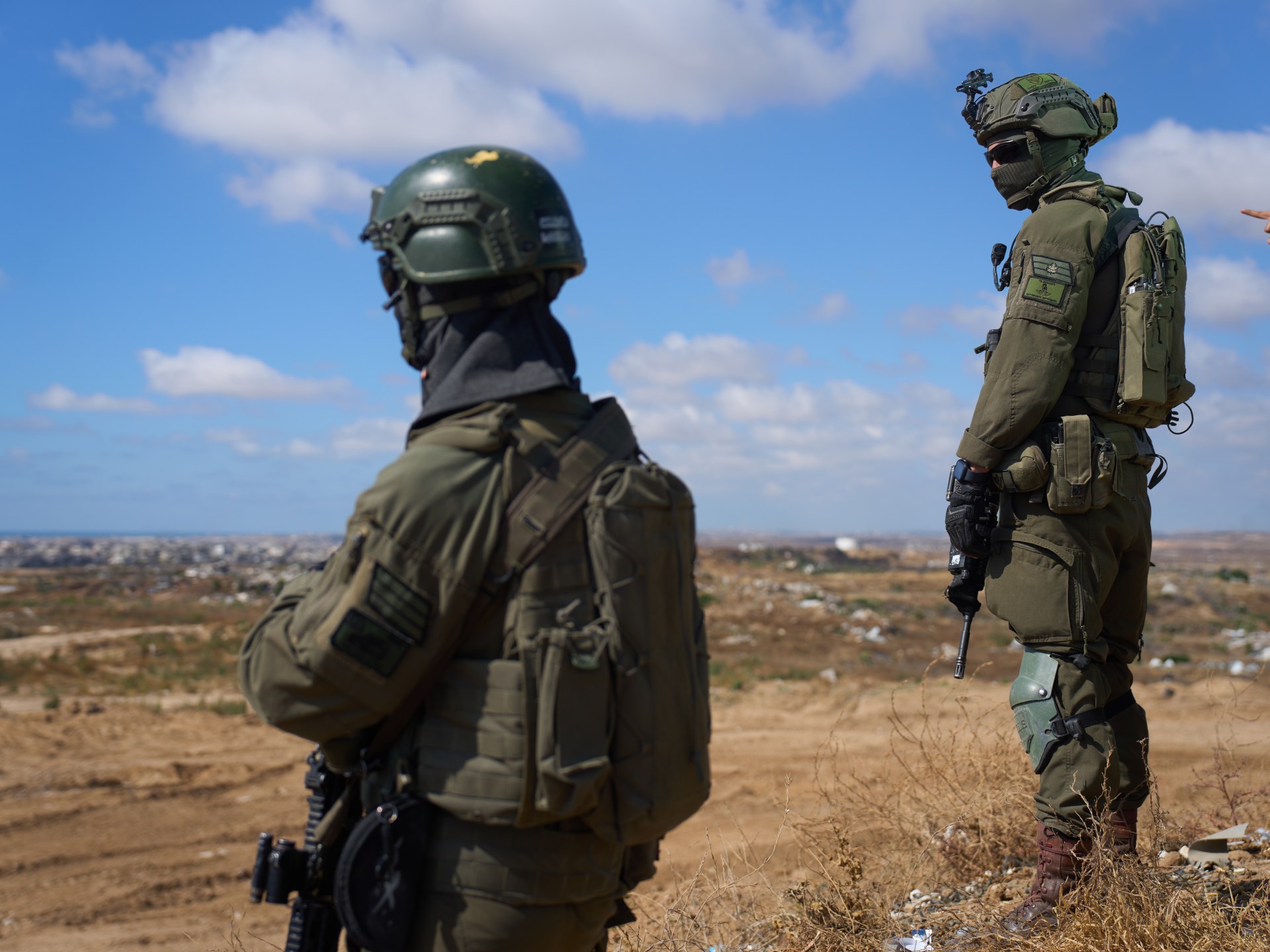

Israel was supposed to fully withdraw its troops from Gaza as part of the ceasefire signed in October. Instead of pulling back, Israeli forces are quietly cementing permanent, heavily fortified military posts across the besieged enclave, according to satellite imagery analysed by Al Jazeera.
An investigation by Al Jazeera’s Open Source Unit, analysing satellite data up to May 2026, has identified 40 distinct Israeli military outposts entrenched within Gaza. Crucially, the analysis proves that eight of these bases were constructed entirely from scratch after the October 2025 truce went into effect, with one site still undergoing active construction.

This physical entrenchment mirrors the increasingly overt territorial ambitions of Israel’s leadership. Speaking at a recent conference, Prime Minister Benjamin Netanyahu confirmed directives to permanently seize the vast majority of the Strip.
Israeli forces have pulled back to the “Yellow Line”, which refers to the buffer and military zones comprising some 60 percent of the enclave’s territory.
“We are currently squeezing Hamas; we now control 60 percent of the territory,” Netanyahu stated, before addressing a crowd member who shouted for complete annexation: “Let’s go step by step. First of all, 70. Let’s start with that.”
Desecration and new constructions
The satellite analysis exposes a systematic effort to build a sustainable, long-term military infrastructure rather than temporary observation posts.
The newly established installations are strategically dispersed: Two in northern Gaza, two in the central region, one east of the Netzarim Corridor, and three in the southern city of Khan Younis.
Advertisement
In one of the most glaring examples of this spatial takeover, Israeli forces established a new military base directly atop the ruins of the Eastern Cemetery in Khan Younis.
Satellite images show that engineering works on the bulldozed burial ground began in November 2025. By May 18, 2026, the site was fully equipped with vehicle staging areas and repetitive structures, likely used for troop housing and operational meetings.
A similar pattern of rapid militarisation is visible in northern Gaza. In Beit Lahiya, an area that appeared completely clear in October 2025 photos, satellite imagery captured the sudden onset of engineering works by mid-November.
By May 2026, a fully enclosed military structure with internal facilities had materialised.
Fortifying the front lines
Beyond the construction of new bases, the Israeli military is aggressively upgrading its preexisting positions within the “Yellow Line” – the temporary demarcation zones where forces were permitted to remain pending a full withdrawal.
East of Gaza City, a military outpost expanded its surface area by an estimated 70 percent between October 2025 and May 2026.
The upgraded site now features extensive internal restructuring, new staging zones for armoured vehicles, and bolstered fortifications. In central Gaza, satellite sensors detected deep defensive trenches being excavated around an existing military installation, signalling a deliberate shift towards long-term field endurance.
The strategic intent of this infrastructure is most evident around the Netzarim Corridor, a route used by the Israeli army to physically sever northern Gaza from the south.
The Open Source Unit identified three separate military outposts guarding the areas east of and immediately around this axis, ensuring Israel’s continued chokehold over movement between the two halves of the enclave.
Just east of this corridor in Juhor ad-Dik, a patch of open land was rapidly transformed into an emerging military base after earthworks began in March 2026.
Encircling a battered population
The geographical distribution of these 40 military outposts reveals a deliberate strategy of encirclement. The bases, connected by a network of earthen berms, trenches, and internal military roads, tightly surround Palestinian population centres from multiple directions.
This suffocating architecture severely restricts the ability of civilians to move freely or access their lands, particularly in areas abutting the Israeli deployment lines.
The expanding occupation stands in direct violation of the Untied States-brokered October 2025 ceasefire agreement, which was based on a 21-point peace plan proposed by President Donald Trump. The framework demanded an end to the hostilities, the immediate entry of aid, the disarmament of Hamas, and a phased Israeli withdrawal.
Advertisement
Instead, the Palestinian death toll continues to rise. Since the war began in October 2023, Israeli attacks have killed nearly 73,000 Palestinians and injured more than 172,919, with women and children making up most of the casualties.
According to Gaza’s Ministry of Health data, the violence did not end with the truce; at least 929 Palestinians have been killed and 2,811 injured in the seven months since the ceasefire officially took effect.
Related News

Kambo: What is the frog poison ‘spiritual ritual’ killing detoxers?
Guatemala denies agreeing to US strikes against drug traffickers
Report warns pro-Palestine protesters face legal crackdown: What to know