Do Palestinians in Gaza expect anything to change after Israel’s election?
 26 October 2026
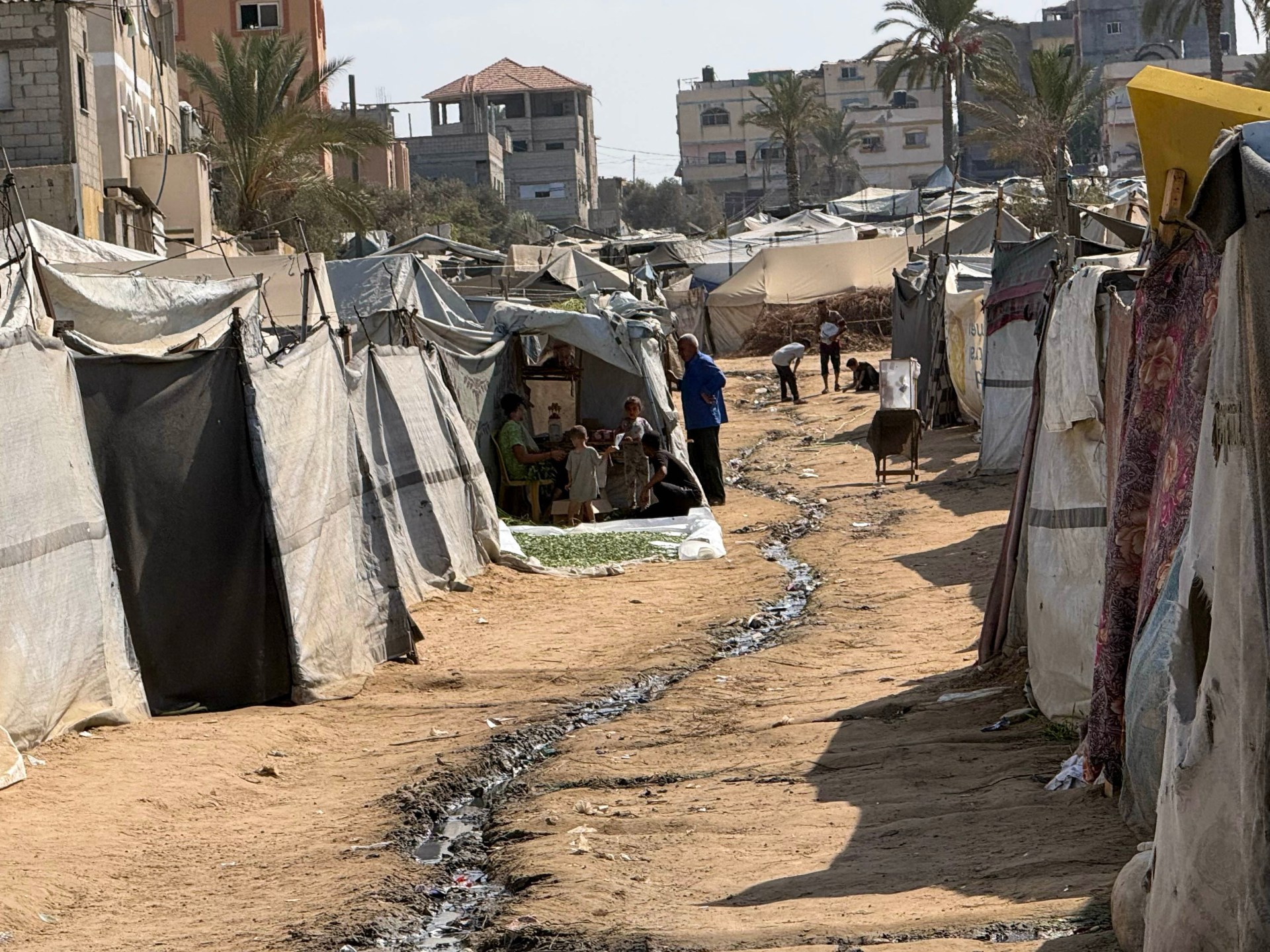

Deir el-Balah, Gaza Strip — After three years of genocidal war, Palestinians in Gaza are watching the upcoming elections in Israel with a mixture of fear and uncertainty.
Although the territory has been under a “ceasefire” since October 2025, Palestinians in Gaza continue to endure almost daily Israeli air strikes, dire living conditions, and a punishing siege that has caused shortages of basic goods.
- list 1 of 2Israeli elections: What are the possible outcomes?
- list 2 of 2Gaza content creator tells Al Jazeera how much her award win means
end of list
Israelis will head to the polls on Tuesday to vote for their next government, in an election that has been shaped by the war on Gaza. Prime Minister Benjamin Netanyahu has been strongly criticised for his handling of security before the October 7, 2023, Hamas-led attacks on Israel. Members of his far-right government have called for a tougher line on Gaza, including the expulsion of its population.
The people of Gaza know this election will shape their future and many have been closely watching the campaign.
Mohammed Eliyan, 36, was displaced from Jabalia refugee camp in northern Gaza and now lives in Deir el-Balah with his five children. He hopes a change in leadership in Israel could bring relief to Palestinians who have endured repeated displacement and war.
“We follow the Israeli election to see who will win in the next phase. We hope there might be some easing for the Palestinian cause and for us, who have been displaced again,” he told Al Jazeera.

Eliyan hopes that Gadi Eisenkot, the former Israeli military commander and Netanyahu’s main rival, will defeat the prime minister. He sees Netanyahu as more hardline and fears that if his Likud party and far-right allies win another term, it would mean more war and further displacement for Gaza’s people.
Advertisement
“We hope there will be changes after the election, and that someone other than Benjamin Netanyahu will win. What Netanyahu has done to the Palestinian people, before and after October 7, has not been a small thing,” he said.
But regardless of who wins, Eliyan does not expect a major shift in Israeli policy.
“They are still our enemy, and I don’t expect things to improve dramatically,” he said. “But we hope someone else might be less harsh than Netanyahu.”
He called on Israel’s next leader to end the war, prevent displacement and starvation, and ease restrictions at Gaza’s crossings.
“We want whoever leads Israel not to be hardline. End the war and let us live in peace,” he said.

Islam Salem, 41, is displaced from Beit Lahiya in northern Gaza and has three daughters. He is following Israel’s election closely and believes the result could affect Gaza’s future and the lives of his children, likely for the worse.
“Politics is our livelihood. It is connected to everything in our lives, our living conditions and even the future of our children,” he said.
But he also believes that elections primarily serve Israeli interests, so even if there are new faces in the next government, the Gaza strategy will likely remain the same.
“Israeli policy will not change in any way. Whatever they take, they consider it theirs and a political gain for them, the gains of a war they have pursued for a long time,” Islam told Al Jazeera.
He pointed to Israel’s continued control of about 65 percent of Gaza’s territory inside the “Yellow Line”. He also doubts whether reconstruction will begin soon in Gaza, where more than 80 percent of buildings have been damaged, and about two-thirds of those have been completely destroyed.
“I think reconstruction will be difficult. They do not want to give others any rights. They want their rights in full, and even more,” he said.
Years of war have left Salem struggling to imagine a future beyond his harsh daily reality.
“There is no future left for us to be afraid of. We live day by day. We have no idea what will happen next, and everything we feared has already happened,” he said.
Asked what he would say to Israel’s next prime minister, he spoke of how many in Gaza are feeling.
“If only a simple person could come and talk to him and say, ‘Leave us alone. Give us some breathing space and let us breathe.’ But he would not be convinced. What can I say to him?” he said.

Hanan Abu al-Maaza, 57, has been displaced more than 12 times during the war on Gaza. She fears Israel’s next government could bring more suffering to its people in the besieged enclave.
Advertisement
“We follow the election because of the fear and anxiety we are living with. We have been displaced more than 12 times, and we are afraid they will do even worse to us than before,” she said.
“We go to sleep without feeling safe, wondering what they might do to us next. The fear is still in our heads and hearts.”
Abu al-Maaza says if Netanyahu is defeated, there will be more chance that she can return to her home in Beit Lahiya.
“I hope someone else wins, so we can have peace of mind and feel safe, and return to our homes. That is what we wish for,” she said.
After years of destruction in Gaza, she hopes Israel’s next leader will show Palestinians more mercy.
“Maybe he will say that there is nothing left in Gaza, that they have done enough and should let people live. There is hardly anything left in Gaza for anyone to think about doing anything more,” she said.
Abu al-Maaza urged Israel’s next leader to end the war and stop the suffering in the territory.
“We have had enough of war and destruction. There is nothing left to destroy, yet the suffering continues,” she said.

Manar Owaida, 23, is originally from northern Gaza and is now displaced in the Tal al-Hawa neighbourhood of Gaza City. She is also keeping an eye on the Israeli election and considering its potential impact.
“I follow the election to know what they are saying and planning, and to understand what is happening around us and how the next Israeli government might affect the situation in Gaza,” she said.
Owaida hopes Gadi Eisenkot will replace Netanyahu, and sees the current prime minister as more extreme than his challenger. But she does not believe a change in Israel’s leadership would transform Palestinian lives, arguing that government policies have remained consistent for decades.
“Israel’s policy is one of crime, killing and destruction. Since 1948, it has been the same policy, the same killing and the same blockade,” she said.
Still, she hopes a new government could ease restrictions and killings and withdraw from areas beyond the “Yellow Line”, allowing life to gradually return to Gaza.
“There might be a change in Israeli policy if someone comes in place of Netanyahu and eases the blockade and the killing we are living through,” she said.
“There could be a withdrawal from the Yellow Line and life could gradually return to Gaza. But we are waiting with fear and uncertainty, alongside a little hope.”
Her greatest concern is that Netanyahu could launch a wider regional war to avoid domestic political pressure around the time of the vote.
Owaida said she wants Israel’s next prime minister to allow Palestinians to live without fear of further violence.
“We want to live in freedom and peace, away from killing and wars,” she said.

Mousa Ali, 33, was displaced from Beit Lahiya in northern Gaza and is now in Gaza City with his four children.
Advertisement
He believes that the outcome of the election could determine whether displaced Palestinians can return to areas beyond the “Yellow Line”.
“For Palestinians, this election is critical, especially because of the Yellow Line. We hope the opposition will be better when it comes to allowing displaced people to return to their areas,” he said.
Ali mentioned Gadi Eisenkot as a possible alternative and hopes Arab parties will perform strongly so they have a role in the next government.
But he does not expect a new leader to bring major changes for the people of Gaza and fears that Israeli attacks will continue. He says a Netanyahu victory would prolong displacement and control over areas around the “Yellow Line”.
“Every day in Gaza, there is blood, there are people being killed, and there is bombing everywhere,” he said. “We hope this policy will end and that a new prime minister will stop this ongoing bloodshed.”
Related News
Israeli minister Bezalel Smotrich calls for war in occupied West Bank
How Gaza war sped up India’s shift towards Israel under Modi
Why is Trump questioning Ilhan Omar’s name?