
Write-In Ralph: South Carolina Republicans challenge Trump’s Senate pick
 02 November 2026
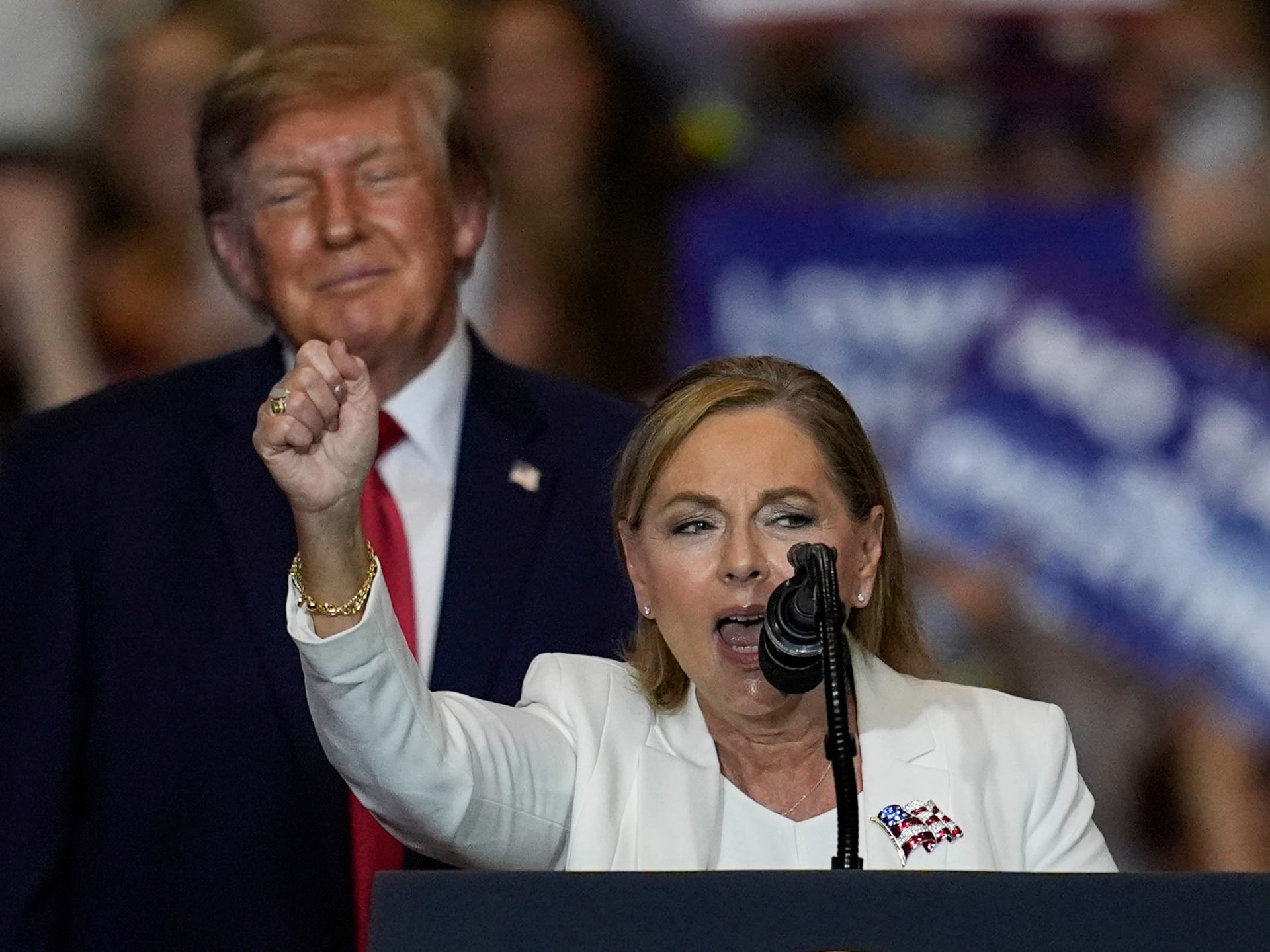

Charleston, South Carolina – Avery Milton thought he was a die-hard supporter of US President Donald Trump. The 28-year-old South Carolina native had voted for Trump in the past three elections and believed in his promise to put America first. But ahead of the midterm elections, the president has left him feeling betrayed.
“He stabbed us in the back during his second term,” Milton told Al Jazeera.
- list 1 of 3White evangelical support for Trump slips but still strong as midterms near
- list 2 of 3What polls say as Trump reverses course on cancelled campaign rallies
- list 3 of 3More than 50 million votes cast in US midterm elections: What does it mean?
end of list
Milton’s disillusionment is not isolated. He said many people close to him share this frustration, particularly younger conservatives around his age who are starting families and entering the workforce. Trump launching a war on Iran, after campaigning on a promise to avoid new wars, was a particular breaking point.
Now, Milton is helping lead a grassroots effort to write in Republican Congressman Ralph Norman for the US Senate, rather than support the party nominee, Senator Darline Graham, who has Trump’s endorsement.
A write-in candidate is someone whose name does not appear on the ballot but can still be chosen by voters who write it in themselves. The option is often used to indicate dissatisfaction with the official candidates, but rarely leads to a victory. One of those rare victories happened in 2010, when Senator Lisa Murkowski of Alaska won after launching a write-in campaign, having lost her Republican primary that year.
In the 2022 South Carolina Senate race, write-in votes accounted for just 0.1 percent of all votes cast.
Despite the president’s endorsement, Graham has struggled to unite conservatives behind her, potentially giving Democratic challenger Annie Andrews an opening in a state that has not elected a Democrat to the US Senate since 1998.

After the sudden death of Republican US Senator Lindsey Graham on July 11, his younger sister, Darline, was appointed to serve out the remainder of his term.
Advertisement
Her appointment followed a tradition of family members succeeding deceased lawmakers, most commonly their spouses. But she made history as the first sibling appointed to fill a Senate vacancy.
Graham initially described the role as an opportunity to finish her brother’s work during the remaining months of his term. But days later, Trump urged her to run for a full six-year term, posting “RUN, DARLINE, RUN!” on Truth Social and promising his “complete and total endorsement” if she entered the race. Three days later, Graham announced on Fox News that she would run.
For some Republicans, the transition from temporary appointment to a full-term campaign happened too quickly. Milton said he felt the appointment had effectively “installed” a candidate.
Graham went on to defeat Republican Ralph Norman in the state’s August primary elections.
Norman, who represents South Carolina’s fifth congressional district, has repeatedly declined to campaign alongside Graham since losing the primary. He has made clear that his support for Graham is limited.
“You have to earn the vote. She hasn’t done that,” he told The Wall Street Journal. “The campaign has been about trying to prop up a candidate.”
The tensions have been particularly pronounced in Upstate South Carolina, where Norman has considerable support. Milton said Graham has done little to reach voters there during the campaign, aside from private dinners and appearances alongside Trump.
“She [Graham] never tried to reach out to everyday people here Upstate. And that spoke volumes about how this South Carolina GOP establishment feels about the grassroots conservatives. They just really don’t care,” Milton said.
Frustrated by what he saw as a failure to represent grassroots conservatives, Milton helped launch the Write-In Ralph movement, building a website and giving the campaign a public platform.
Milton said he and other supporters wanted a senator who would think independently, rather than simply fall in line with party leadership.
“We don’t necessarily want somebody that’s a rubber stamp for everything,” he said, adding that he wanted someone willing to “think of all the sides of an issue and policy”.

South Carolina’s independents
A sizeable group of South Carolina voters does not identify with either major party.
While the state does not register voters by party, a New York Times/Siena poll conducted in October suggested that 30 percent of likely voters identified as independents. Among those voters, Democratic Senate candidate Andrews led Graham by 20 percentage points.
Advertisement
The findings point to a potential blind spot for Republicans seeking to consolidate support around Trump’s Make America Great Again (MAGA) coalition.
John Connolly, a 77-year-old retiree who lives in South Carolina’s Lowcountry, is one example of a voter whose political allegiances have shifted over time. He sees Graham’s appointment as part of a political culture that rewards loyalty over experience.
“I see her as nothing more than a puppet,” he told Al Jazeera. “To nod her head yes whenever she’s told to.”
Leila Ali, a regional campaign adviser who has spent more than a decade working with grassroots organisations across the US South, said political strategists often underestimate the diversity of the Southern electorate.
“The biggest thing that people get wrong is that they think the Southern vote is this monolith,” she told Al Jazeera.
Ali pointed to South Carolina’s early voting figures as evidence of that engagement. Nearly 950,000 early votes have been cast in the state, according to the state’s Election Commission, setting a new record for early voting in a midterm election.
An increasingly close Senate race
The stakes of this race have become increasingly apparent as the November 3 election approaches.
Despite Trump winning South Carolina by nearly 18 percentage points in 2024, he has made two trips to South Carolina in three months to campaign for Graham – an extraordinary show of presidential attention.
And polling suggests the race is far more competitive than Republicans might have expected. The October New York Times/Siena College poll had Graham and Democratic challenger Annie Andrews tied at 48 percent among likely voters.

For Democrats, this division offers a rare opening in a deep-red state where the party has struggled to compete.
Even with the race tightening, Republicans like Milton are willing to risk a Democratic victory by writing in Ralph Norman on their ballot. And if Graham loses, Milton says the blame should not fall on the write-in effort.
“They’re going to try to point the finger on this Write-in Ralph movement,” he said. “But I just want to make something very clear: that would assume that our votes would have gone to Darline anyway, and that’s just not the case.”
Related News

Iran war live: Trump rules out strikes ‘today’; Israeli forces raid Hebron

Turkiye’s Erdogan urges Russia and Ukraine to stop Black Sea attacks

Serbia after Vucic: Who will be PM and when will a government be formed?