
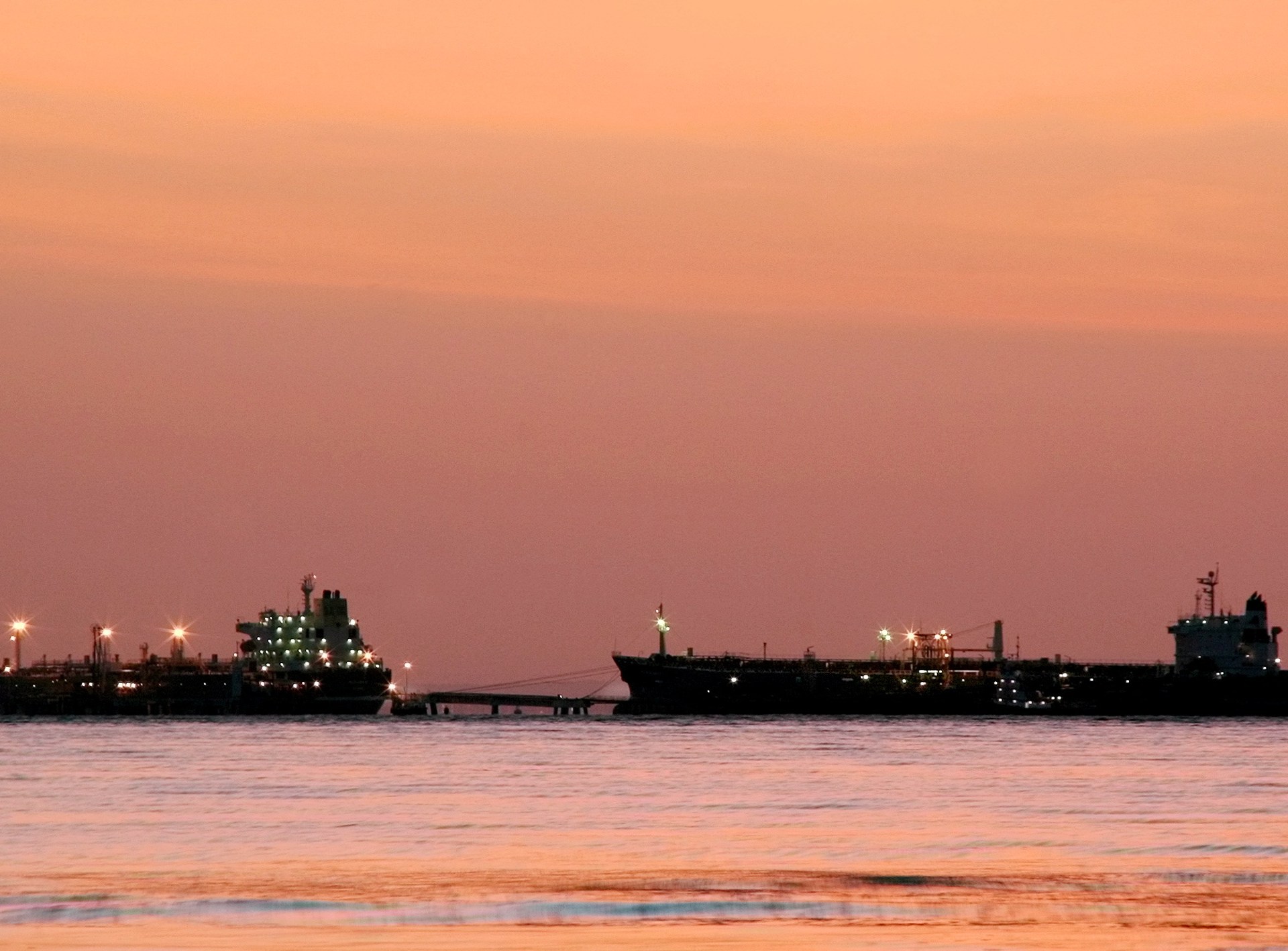

Venezuela is exporting about half of its oil output to the United States, according to a senior US official, seven months after Washington abducted President Nicolas Maduro and installed an interim government in Caracas.
Speaking at an industry event in Houston on Tuesday, Under Secretary of Energy Kyle Haustveit said more than 500,000 barrels per day (bpd) are now moving from Venezuela to the US out of national output of roughly 1.25 million bpd.
- list 1 of 3Trump vows to find ‘leakers’ after reports of depleted Iran war munitions
- list 2 of 3Venezuela says 131 political prisoners freed amid post-Maduro talks
- list 3 of 3How much power does the US hold in Venezuela?
end of list
He said the oil was moving to refineries “built specifically for that crude”.
Venezuela holds the world’s largest proven oil reserves – an estimated 303 billion barrels, or about 17 percent of the global total, according to the US Energy Information Administration.
But decades of underinvestment and sanctions had left it producing roughly 1 percent of world supply. At the end of 2025, it was producing about 1 million barrels per day, with some 135,000 barrels per day going to the US.
The country’s oil is heavy, sour crude, the type refineries on the US Gulf Coast are built to process, making the resumption of Venezuelan imports a direct benefit to those plants.
Haustveit said Washington was also helping to scale up production in Venezuela, noting that the US is sending more than 100,000 bpd of naphtha to the country, where it is blended with heavier crude.
He called the arrangement “a beautiful energy partnership”, saying there was a “real value being created on both sides of the trade”.
Venezuelan officials at the same event said the country hopes to increase its output further.
Advertisement
Jovanny Martinez, a vice president at state oil company PDVSA, said Venezuela’s crude output would reach 1.245 million bpd by the end of August, with exports up 19.7 percent this year. He said fuel output has risen 12.9 percent so far this year, supplying 5.4 percent more fuel domestically.
“We made a big effort for an energy reform, and now we’re looking for real results in terms of development,” Martinez said.
Martinez also said the country’s refineries should be improved, modernised and expanded, and that Venezuela needs diluents for heavier grades that should be developed domestically.
The increase in Venezuela’s oil output comes after US President Donald Trump said Washington would run Venezuela and tap its oil reserves. In the days following Maduro’s removal, he said the “money will be controlled by me” to “ensure it is used to benefit the people of Venezuela and the United States”.
US Secretary of State Marco Rubio later told the US Congress that the funds from Venezuelan oil sales “will be deposited into an account that we will have oversight over”. He added that Caracas would submit a monthly budget request against the account, with Washington specifying up front what the funds could not be used for.
The Financial Times reported in July that the US has collected more than $13bn in revenue from Venezuelan oil sales this year.
Responding to that report on July 27, Trump said the actual figure was higher.
But his administration has said almost nothing about what has happened to the money.
In April, a State Department official told Congress that the department had authorised the disbursement of about $3bn to Venezuela.
The Council on Foreign Relations, an independent think tank, said in June that while the administration has repeatedly framed its control of Venezuelan oil exports as benefitting both countries, “it has not publicly disclosed how much oil it has sold, how much revenue it has collected, or how it has used those funds”. It said the opacity extends to Venezuelan gold and other mineral exports Washington also controls.
The think tank also expressed concern over the Trump administration’s decision to exclude Venezuela’s opposition and civil society from discussions with the interim government in Caracas over the country’s future.
That government is led by Maduro’s vice president, Decly Rodriguez.
“Without accountability mechanisms or a clear democratic roadmap, the United States risks entrenching a corrupt successor regime,” it added.
Venezuela’s opposition, including Nobel peace laureate Maria Corina Machado, in May agreed to a new roadmap that called for presidential elections and political negotiations.
Advertisement
Related News
UNESCO places occupied West Bank, Lebanon sites on endangered heritage list
Syrian court sentences Wassim al-Assad to death
Eurovision to bar countries at war from hosting: What that means