

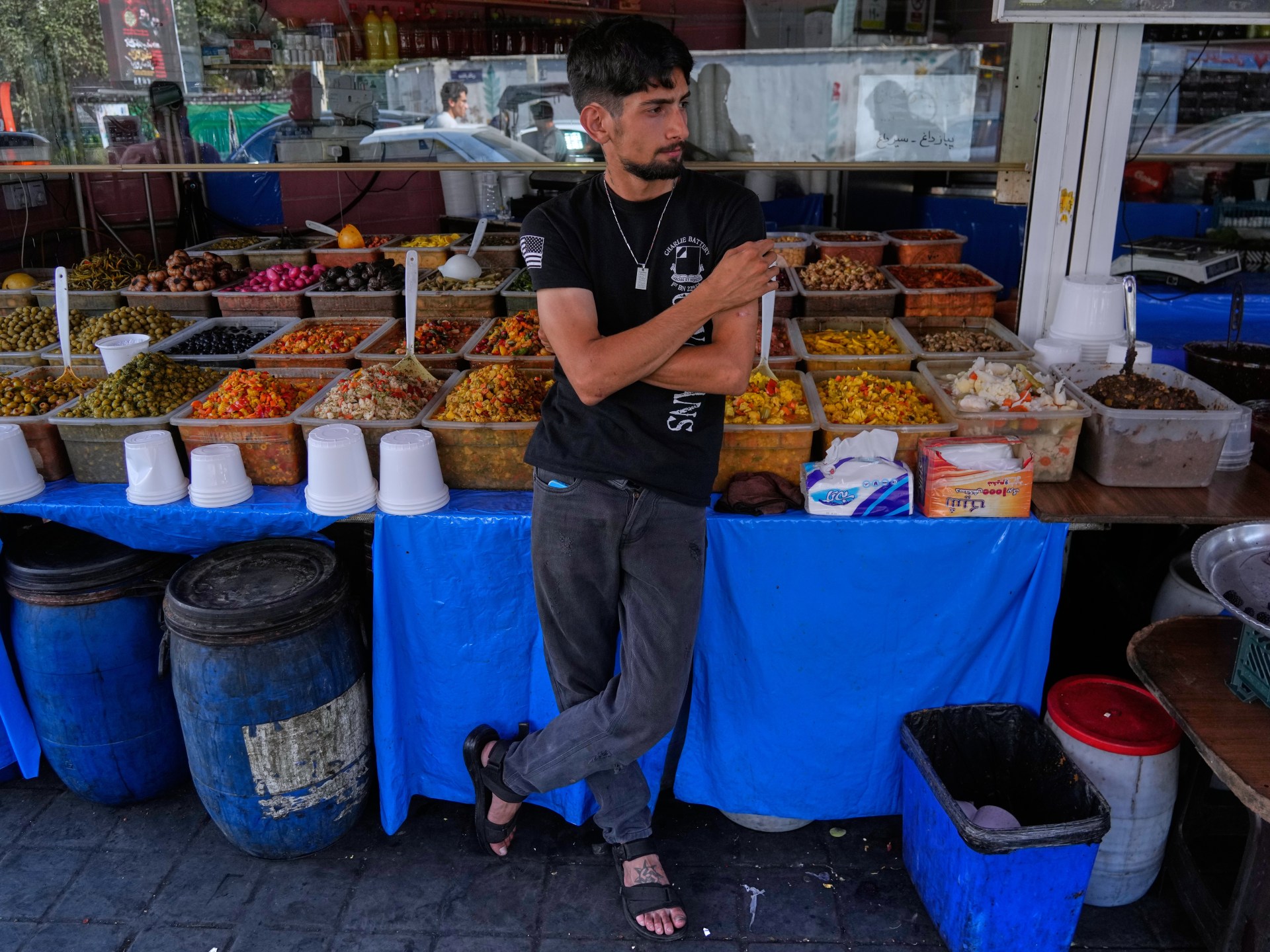

Tehran, Iran – A Tehran resident named Saeed says he is dismayed as he looks for better-paying employment than his current elementary school teaching job after months of war with the United States and its naval blockade of Iranian ports.
“You take one look at the condition of job postings you can find online or in person, and you will understand why some young people feel like it’s not even worth it going out for work,” the 26-year-old told Al Jazeera. “But the expenses don’t go away.”
- list 1 of 3Iran’s grip on trade is a potent weapon, but it has an expiry date
- list 2 of 3What’s behind Trump’s shift to economic pressure on Iran? Will it work?
- list 3 of 3US threatens ‘indefinite’ blockade against Iran: How long can it last?
end of list
People working as teachers, cashiers and salespeople earn a monthly salary of less than 200 million rials ($107 at the current exchange rate), and some jobs even go considerably below the basic monthly minimum wage of about 166 million rials ($88), he said.
“A lot of employers don’t offer insurance and are asking for 12 hours of work per day, sometimes six days a week. They also come up with all sorts of excuses to deduct pay whenever they can, knowing you have limited options.”
Saeed has a master’s degree in Persian literature but said many Iranians like him are now frequently searching for any possible job opportunity, regardless of their area of education or experience, because putting food on the table is exceedingly more difficult.
For a worker earning minimum wage plus receiving government support, 1kg (2.2lb) of lamb can currently consume about 10 percent of an entire month’s wages while 10kg (22lb) of Iranian rice can absorb more than one-fifth. That is not to mention rapidly growing housing costs as well as utilities, transit and healthcare.
Advertisement
When the government approved a 60-percent increase in the basic minimum wage at the end of the previous Iranian calendar year in March – risking the printing of more money and inflation in the process – the cost of a subsistence package required for an average 3.3-person worker household was estimated at 430 million rials ($230).

That was as economic shockwaves from the United States-Israel war on Iran were rippling out and from two state-imposed internet shutdowns, including one during nationwide protests in January when thousands of people were killed. Those factors only compounded the Iranian economy’s systemic woes stemming from decades of corruption and mismanagement paired with decades of US and United Nations sanctions.
Millions of people across Iran are struggling to maintain their livelihoods and survive, but the country’s embattled economy is still far from collapse despite more than five months of war.
The resource-rich country of more than 92 million people has developed a relatively diversified economy for a major oil exporter as the authorities over decades leaned on self-sufficiency in the face of economic embargoes and confrontations with the US, Israel and the West.
But Iranians are feeling the direct impact of sanctions and the current war. According to the latest report by the Statistical Center of Iran released at the end of July, year-on-year inflation was about 88 percent.
Food inflation stood at more than 128 percent compared with a year earlier, meaning that the same food basket cost roughly 2.28 times what it did in July 2025. Among major food groups, year-on-year inflation was at 261 percent for oils and fats; 147 percent for milk, cheese and eggs; and 145 percent for meat and poultry.
While prices surged at rates not seen in more than eight decades in Iran, jobs were lost across most industries in 2026.
Youth unemployment was at 23.4 percent in the spring, up 3.7 percent year-on-year, the Statistical Center said.
Overall unemployment was at 9.1 percent in the same period, but labour participation was at just 40 percent, meaning that most working-age people are operating outside the official labour force with many engaged in irregular, informal work.
Even some of those who have the luxury of owning assets and businesses are having a hard time getting by in the faltering Iranian economy.
Yashar, a 38-year-old who co-owns a grocery shop in northern Iran’s Lahijan with his mother, said they also own their home and a second small shop that they rent to a tenant.
Advertisement
“From the outside it might seem like we’re well-off, but to us, it feels the opposite because the rent and my mother’s pension can barely keep up with the basic costs, let alone any extra purchases or savings. Business at the shop is terribly slow. We’re always falling short of the money we need for the next purchase of goods to sell,” he said.
President Masoud Pezeshkian said last week that the war and the naval blockade of Iran’s southern ports imposed by the US have raised costs for his cash-strapped government.
“We could sell oil, and now we can’t. They have also struck and destroyed some of our factories, so we can’t levy taxes in the same way either. We must also pay them so they can stay up and running and the wheels of the economy can spin,” he said.
Pezeshkian’s administration is also seriously considering significantly raising the price of petrol on the back of another hike in December as well as tightening caps imposed on monthly fuel quotas for personal vehicles but has been wary since previous price hikes have contributed to nationwide protests.
Pezeshkian and some other senior figures within the establishment have endorsed a diplomatic resolution with Washington, but no agreement with the US appears on the books in the short term, even as talks continue with Oman and mediators over an arrangement on shipping through the Strait of Hormuz.
As the authorities gear up for another potential round of conflict over the strategic waterway and other issues, the people of Iran continue to pay the highest price among affected stakeholders and consumers around the globe.

Ladan, 28, who has an office job in Tehran but also runs an online shop selling necklaces, bracelets and trinkets on Instagram to make ends meet, says the hustle at times seems pointless because it offers no real prospects of sustained growth.
She told Al Jazeera that last week she noticed she made only about 20 million rials (less than $11) in profit after closing more than a dozen online sales.
“I’m so sick and tired of everything. But even though I live with my parents and don’t have to pay rent, I can’t even buy myself a Pride because, at the end of the day, I’m earning in rials,” she said, referring to the cheapest domestic vehicle, unaffectionately known as the “chariot of death” among Iranians due to its low safety standards. It costs up to 10 billion rials ($5,350).
Related News
Nepal search teams rescue two workers from hydropower tunnel
Iran war live: US, Tehran exchange opposing claims over Hormuz control
Trump dismisses mental health concerns on USS Lincoln aircraft carrier