

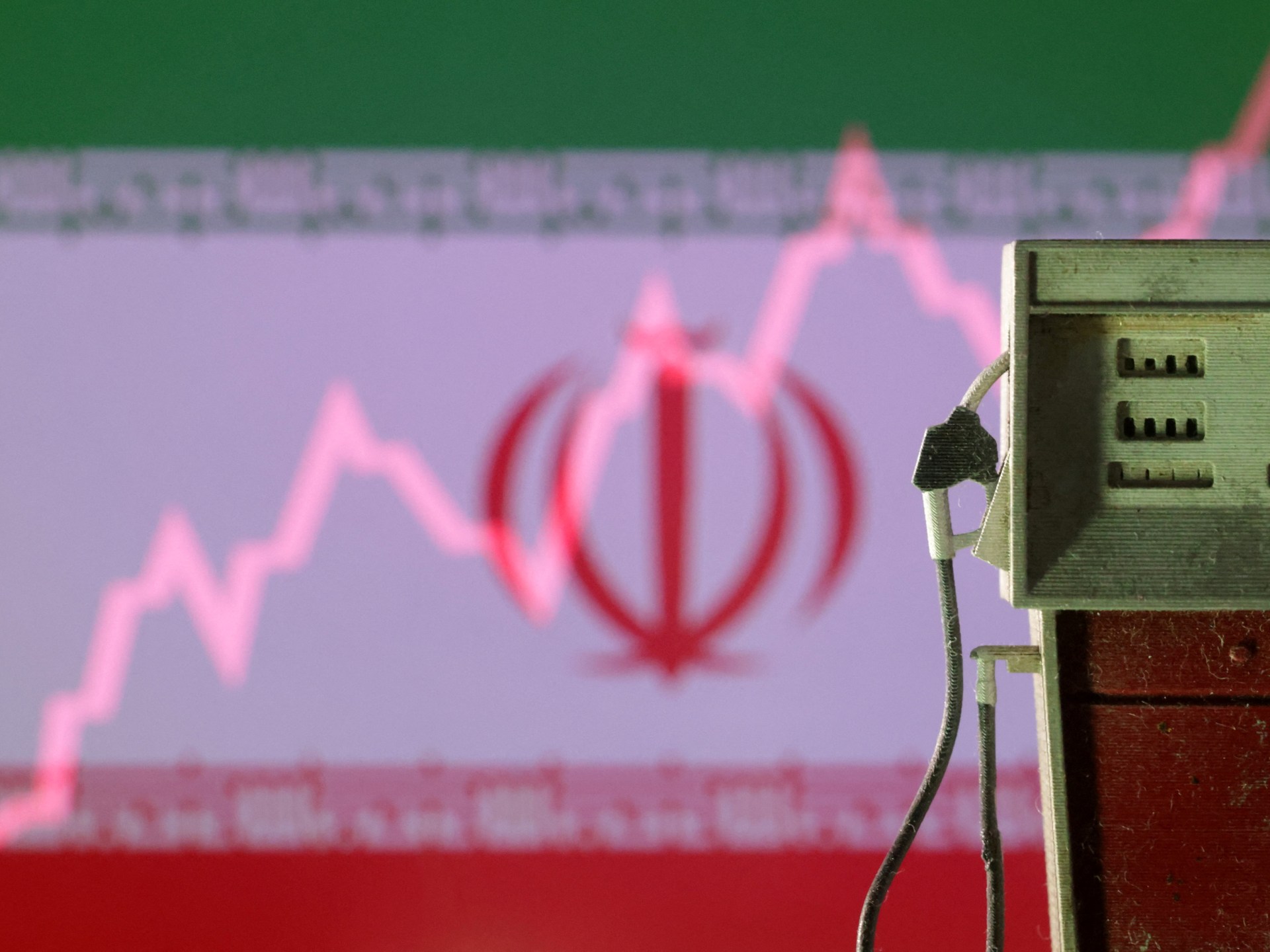

US Treasury sanctions more than two dozen Iranian entities, citing efforts to disrupt Tehran’s global financial activities, amid ongoing diplomatic effort to end the US-Israel war on Iran.
The United States has launched another wave of sanctions against Iran under its Operation Economic Outcast, a move that comes shortly after US President Donald Trump threatened renewed military action next year.
The Department of the Treasury announced on Monday that it had targeted more than two dozen Iranian exchange houses, front companies, and key personnel with sanctions “in a sweeping effort to disrupt Iran’s global shadow banking networks”.
- list 1 of 4Can the US and Iran sustain a ‘frozen war’?
- list 2 of 4Iran says it downed US drones over Hormuz as bid to end war remains stalled
- list 3 of 4Iran says held talks with Qatari mediators, urges US to accept conditions
- list 4 of 4Iran says it will use ‘all available means’ to counter US blockade
end of list
“Iran’s shadow banking system is the last financial lifeline of a bankrupt regime,” said US Secretary of the Treasury Scott Bessent.
The US Treasury claimed these entities help Iran “move billions of dollars through the international financial system to provide the regime access to foreign currency despite comprehensive sanctions”.
Bessent also vowed the “Treasury will continue dismantling these illicit networks until we have buried the head of the snake.”
The Central Bank of Iran oversees the designated entities, according to the statement.
The designated entities include an Iran-based company named “Rahbar Bazargani Nesim Baharan Qeshm Company (Nesim Baharan)”, which the Treasury claims worked closely with Iranian exchange houses and their front companies to facilitate transactions on behalf of Sarmayeh Bank’s Iranian clients, which include major Iranian petrochemical companies.

In addition, “Mina Fashki and Partners Exchange Company (Fashki Exchange) and Mellat Exchange Company” and a number of their owners and employees were designated.
Advertisement
The US claimed earlier this month that its sanctions campaign had pushed Iran’s rial to new lows and driven inflation to about 90 percent.
AP reported that Iran’s Foreign Minister Abbas Araghchi said Tehran still hoped diplomacy could end its nine-month war with the US, while President Trump said Iran wanted a deal, but one that was not acceptable to him.
Fox News said Trump told its chief foreign correspondent that he was “inclined to order military strikes against Iran after the new year if the two countries fail to reach an agreement”.
The remarks came as diplomatic efforts continued to end a conflict that has destabilised the Middle East, disrupted shipping, driven up global energy prices, and drawn in countries across the region.
Related News
‘Partnership buys silence’: Fears grow over EU-Rwanda deportation plans
Russian bombing of Ukrainian aid centre kills 24 people: Zelenskyy

‘Don’t bring your camera’: Filmmakers face extortion in Lagos