
US Supreme Court rejects Trump mail ballot restrictions ahead of midterms
 15 September 2026
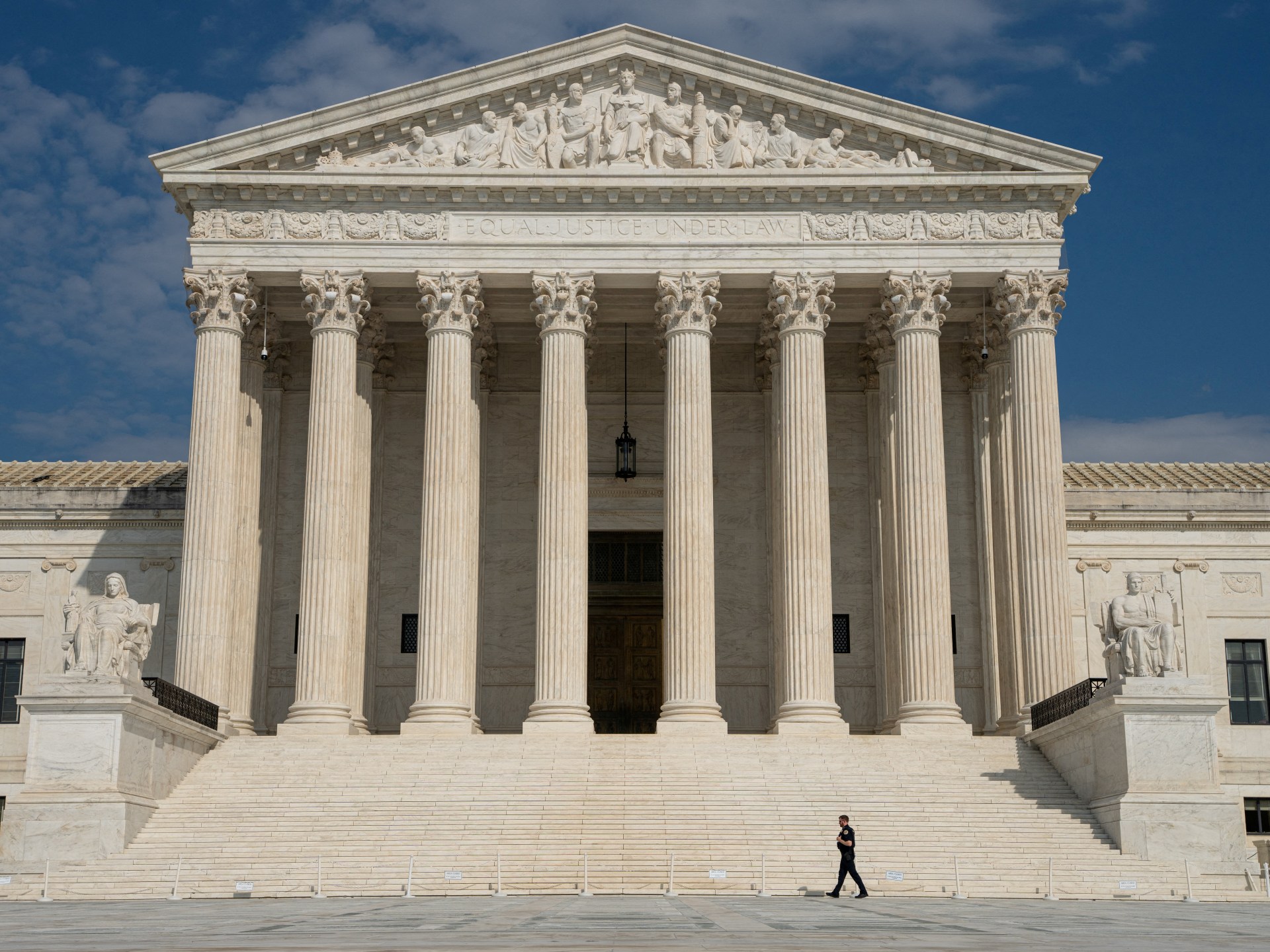

The US Supreme Court has rejected President Donald Trump’s bid to allow the US Postal Service to enforce a rule targeting mail-in ballots.
On Monday, the conservative-majority court refused to lift an order by US District Judge Indira Talwani that blocked the measure, dealing a blow to Trump’s efforts to restrict voting by mail before the November midterm elections.
- list 1 of 4Two dozen Democrat-led states sue Trump over mail-in ballot limits
- list 2 of 4Trump calls Virginia election ‘rigged’ after redistricting referendum
- list 3 of 4US judge rejects immediate block on Trump’s mail-in voting executive order
- list 4 of 4Supreme Court strikes down US campaign spending limits in landmark ruling
end of list
The postal agency adopted the rule after Trump signed an executive order in March seeking to tighten rules around mail-in voting. Under this measure, states were required to send the Postal Service a list of recipients and use ballot mail envelopes previously approved by the agency.
The Postal Service was allowed to deny ballots if they failed to comply with the new standards or were not associated with registered voters on the lists.
Talwani imposed an injunction blocking the rule, saying that it likely violated the US Constitution and would be impossible to apply given the nearing midterms.
Shortly after, the Trump administration issued an emergency request to the Supreme Court urging it to allow an “important federal policy to protect the mails from being used to commit voter fraud”.
In late August, the Supreme Court had temporarily allowed Trump to move ahead with his executive order on procedural grounds, but did not rule on the legality of the plan.
In the latest decision, the court said in an unsigned order that the administration was “unlikely to succeed on the merits” of its challenge. Justice Samuel Alito and Justice Clarence Thomas dissented, with Alito writing that some plaintiffs lacked standing while the rest were pursuing a claim the court had recently called a “Hail Mary pass”.
Advertisement
Justice Brett Kavanaugh, who was appointed by Trump, voted with the majority against the administration, though he indicated he could support the policy at a later stage.

Critics warn the restrictions could disrupt the delivery of thousands of ballots and disenfranchise groups who rely on mail-in voting. In some states, primarily Democratic-leaning, voters cast ballots largely by mail. Alabama, North Carolina and Wisconsin have already begun sending ballots ahead of the midterm elections.
Trump has long cast doubt on the security of mail-in voting, repeating debunked claims of widespread election fraud, despite voting by mail himself, including during the 2024 election.
Related News

Where water conflicts pose the biggest threat in 2026
Syrian court sentences Wassim al-Assad to death
Minnesota official sues Texas governor to force ICE agent’s extradition