
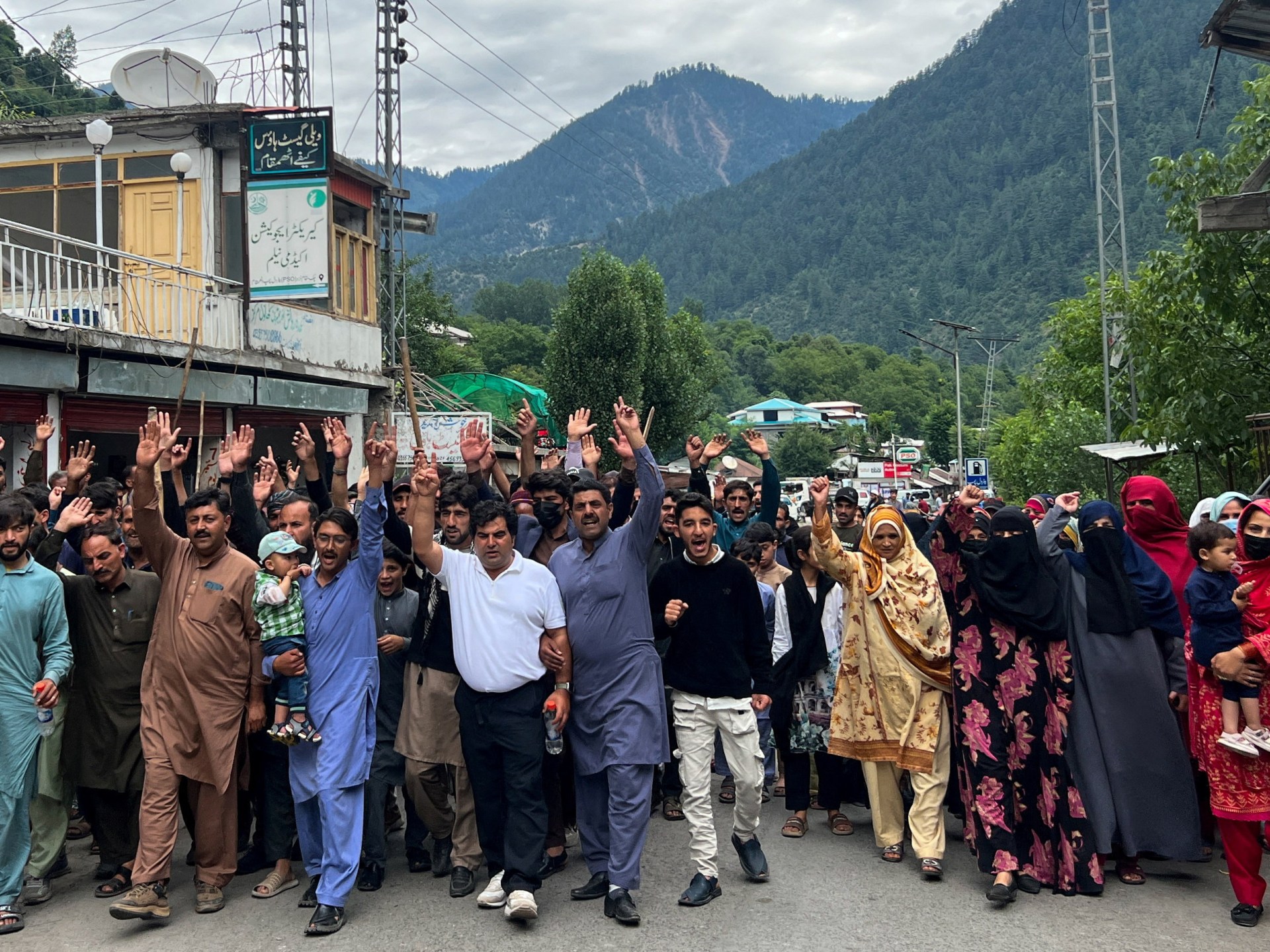

The United Nations human rights chief has called for an independent investigation into deadly unrest in Pakistan-administered Kashmir.
On Friday, the UN High Commissioner for Human Rights, Volker Turk, urged Islamabad to launch “prompt, thorough and impartial investigations” into all civilian and security force deaths. At least 31 people have been killed in clashes since last month, in the run-up to regional elections at the end of this month.
- list 1 of 3Protest in Pakistan’s Kashmir stalls after nine killed in clashes
- list 2 of 3Pakistan-administered Kashmir returns to daily life after deadly protests
- list 3 of 3Decades of denial: Death certificate for disappeared reopens Kashmir wounds
end of list
The unrest has involved the Jammu Kashmir Joint Awami Action Committee (JAAC), an umbrella group of traders and activists.
While the movement initially formed to protest against rising food prices and utility tariffs, the current flashpoint centres on a legal dispute over legislative seats reserved for Kashmiri refugees. The JAAC demands the abolition of those seats, arguing they allow non-residents to alter local political outcomes.
UN officials expressed alarm over Pakistan’s decision to classify the JAAC as a proscribed “terrorist” organisation under domestic anti-terrorism laws.
The global body warned that utilising anti-terror mechanisms to criminalise peaceful assembly and enforce widespread internet blackouts raises severe freedom of association concerns.
The crisis has amplified the long-running diplomatic feud between nuclear-armed neighbours India and Pakistan, which have both claimed the disputed Himalayan territory in full since their independence in 1947.
According to the Pakistani newspaper Dawn, the crisis hit a deadly new peak on July 14 during intense clashes in the Poonch division, where security forces attempted to clear roadblocks ahead of a planned JAAC “long march” to Muzaffarabad. The escalation resulted in nine deaths – seven civil activists and two law enforcement officers.
Advertisement
Defending the state actions during the violence, Poonch Divisional Commissioner Waheed Khan told Reuters that protesters had blocked a security convoy and attacked officials. “Police and security officials responded in self-defence.”
In New Delhi, the Ministry of External Affairs spokesperson Randhir Jaiswal said in an official statement released on Wednesday that the unrest was a “direct consequence of Pakistan’s decades-long systemic exploitation” of the region.
Turk has appealed for immediate calm, pushing for “meaningful and inclusive political dialogue” over security-led measures to defuse deep-seated grievances regarding regional autonomy and inflation.
Related News
‘A nightmare’: Strugging with the aftermath of Venezuela’s earthquakes
‘Pick up the phone’: IRGC appears to rebuff US Strait of Hormuz ‘hotline’
Why el-Obeid matters as Sudan’s war enters a new phase