Japan lifts ban on lethal weapons exports in major shift of pacifist policy
 21 April 2026
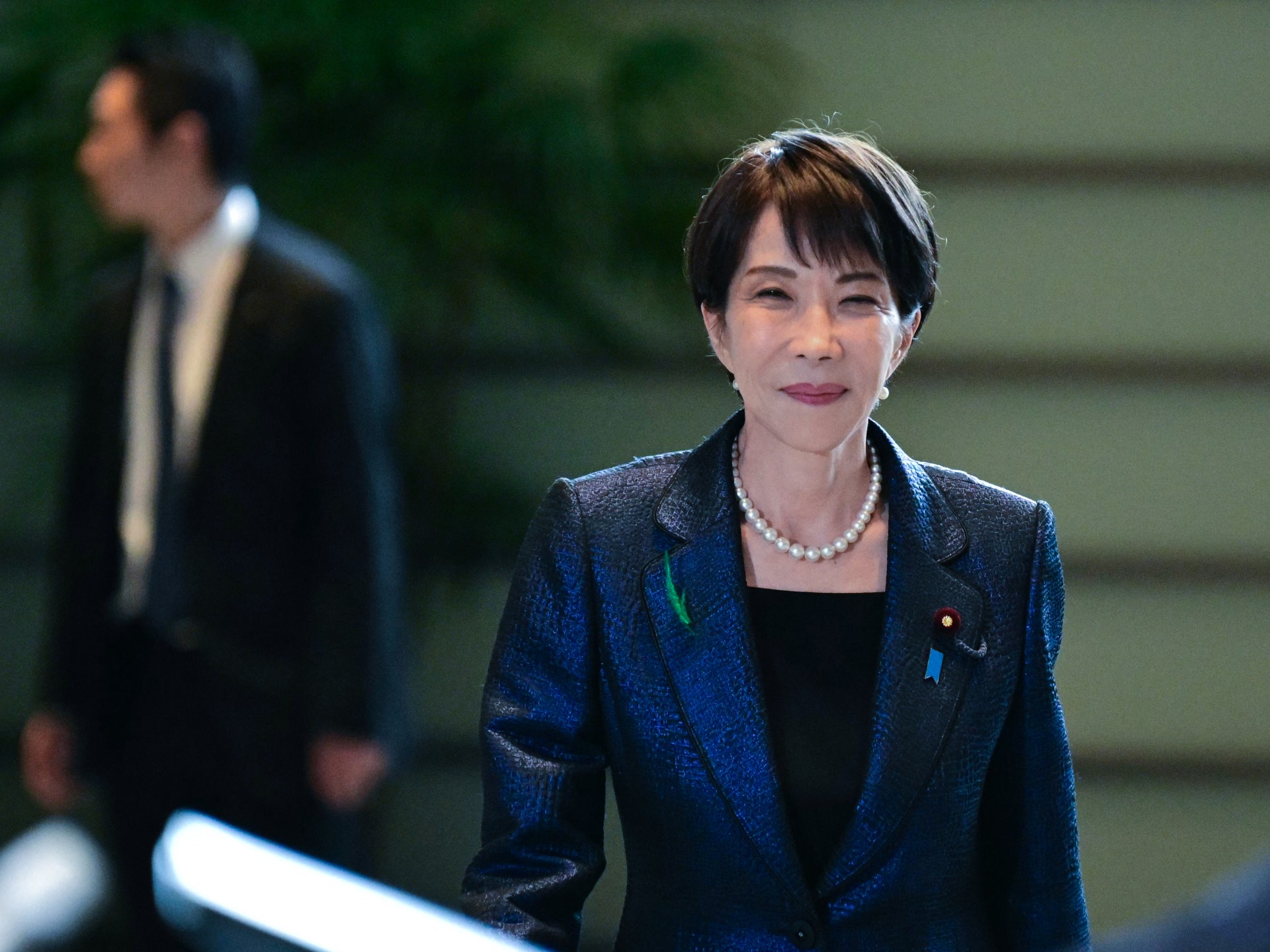

The cabinet of Japanese Prime Minister Sanae Takaichi has lifted a ban on exporting lethal weapons, including fighter jets, in a major shift to Japan’s pacifist post-World War II constitution.
In a post on X announcing the changes on Tuesday, Takaichi did not specify which weapons Japan would now sell overseas. However, Japanese newspapers said the changes would encompass fighter jets, missiles and warships, which Japan has recently agreed to build for Australia.
- list 1 of 4What are Iran’s $100bn in frozen assets and where are they held?
- list 2 of 4Can Japan’s arms industry gain from Trump trust loss?
- list 3 of 4North Korea launches ballistic missiles towards sea off its east coast
- list 4 of 4Australia and Japan sign contracts for $7bn warships deal
end of list
“With this amendment, transfers of all defence equipment will in principle become possible,” Takaichi said, adding that “recipients will be limited to countries that commit to use in accordance with the UN Charter”.
“In an increasingly severe security environment, no single country can now protect its own peace and security alone.”
At least 17 countries will be eligible to buy weapons manufactured in Japan under the changes, Japan’s Chunichi newspaper reported, adding that this list may be expanded if more countries enter into bilateral agreements with Japan.
Previous rules, introduced in 1967 and enacted in 1976, had limited Japanese military exports to non-lethal arms, such as those used for surveillance and mine sweeping, Japan’s Asahi newspaper reported.
Asahi also reported that Japan will still restrict exporting weapons to countries where fighting is currently taking place, but exemptions are allowed under “special circumstances” where Japan’s national security needs are taken into account.
Countries interested in buying Japanese-made weapons include Australia, New Zealand, the Philippines and Indonesia, which recently signed a major defence pact with the United States, Chunichi reported, citing Japan’s Ministry of Defence.
Advertisement
Tokyo’s change in policy comes soon after Japan and Australia signed a $7bn deal that will see Japan’s Mitsubishi Heavy Industries build the first three of 11 warships for the Australian navy.
Takaichi sends offering to controversial war shrine
The changes announced by Takaichi on Tuesday come amid reports that the Japanese prime minister had sent a ritual offering to the notorious Yasukuni Shrine in Tokyo on the occasion of its spring festival.
Built in the 1800s to honour Japan’s war dead, the shrine includes the names of more than 1,000 convicted Japanese war criminals from World War II, including 14 who were found guilty of “Class A” crimes.
Visits by Japanese officials to the shrine have long been considered insensitive to the people of China, South Korea, and other countries that Japanese soldiers brutalised during the war.
After the defeat of Axis countries, including the bombing of Japan’s Hiroshima and Nagasaki at the end of World War II, Japan introduced a new constitution renouncing participation in war.
However, Takaichi, considered a China “hawk” and sometimes referred to as Japan’s “Iron Lady”, is among a number of recent Japanese leaders to have pushed back against the country’s pacifist stance.

Related News
Afghan villagers turn to gold-panning to sustain livelihoods
Iran war: What is happening on day 50 of the US-Iran conflict?

Eight children killed in mass shooting in Louisiana, US media reports