

EXPLAINER
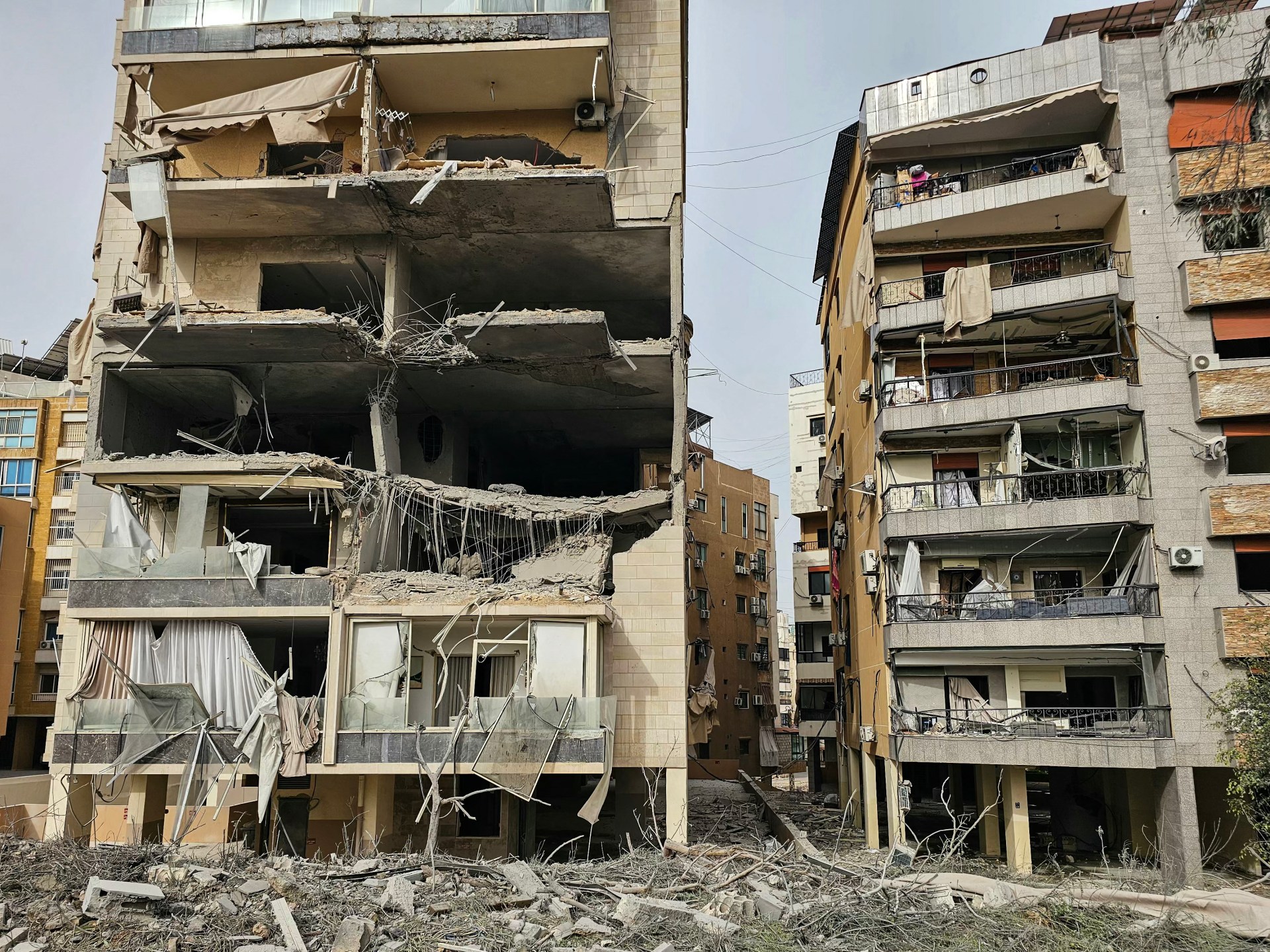
Lebanon has declared a national day of mourning after a wave of Israeli attacks killed at least 254 people and injured more than 1,165 in a single day, with Prime Minister Nawaf Salam mobilising “all of Lebanon’s political and diplomatic resources to stop the Israeli killing machine”.
Israeli Prime Minister Benjamin Netanyahu said Lebanon is not part of the ceasefire between the United States and Iran, a position echoed by US Vice President JD Vance, who said: “We never made that promise.”
Pakistani Prime Minister Shehbaz Sharif, who, along with the country’s army chief, mediated the ceasefire, had, however, said the deal covered a pause in fighting in Lebanon. Iran’s Foreign Minister Abbas Araghchi quoted Sharif in insisting that the “terms are clear”, warning that Washington must choose between a ceasefire or “continued war via Israel”. He added that “it cannot have both.”
Here is what we know:
In Iran
- Iran demands Lebanon truce: Iranian President Masoud Pezeshkian said a halt to Israeli attacks in Lebanon was one of the key conditions of Iran’s 10-point plan for securing an end to the Middle East war.
- Iran speaker claims ceasefire violations: Iran’s parliament speaker, expected to lead talks with the US in Islamabad, said a ceasefire and negotiations were “unreasonable” because of violations of Tehran’s 10-point truce plan. Mohammad Bagher Ghalibaf said in a statement on X that these included continued attacks in Lebanon, a drone entering Iranian airspace and a denial of the country’s right to enrichment.
- Iran’s published ceasefire plan not agreed to by US: A US official said Wednesday that a 10-point ceasefire plan published by Iran is not the same set of conditions agreed on by the White House for pausing the war. “The document being reported by media outlets is not the working framework,” the senior official said on condition of anonymity.
Advertisement
War diplomacy
- Vance takes over US negotiations: US Vice President JD Vance will lead the country’s delegation for talks with Iran in Pakistan, scheduled for Saturday. US President Donald Trump’s chief envoy Steve Witkoff and son-in-law Jared Kushner, who have so far negotiated with Iran, will also join Vance in Islamabad. Iran has made it clear that it does not trust Witkoff and Kushner, who led the US team in talks in Geneva in February that were still ongoing when Trump joined Israel in bombing Iran, beginning the war.
- UN outrage over Lebanon killings: The UN rights chief and the International Committee of the Red Cross (ICRC) voiced outrage over Israel’s attacks on Lebanon. “The scale of the killing and destruction in Lebanon today is nothing short of horrific,” UN High Commissioner for Human Rights Volker Turk said. “Such carnage, within hours of agreeing to a ceasefire with Iran, defies belief.”
- Macron pushes to include Lebanon in ceasefire: French President Emmanuel Macron has spoken with US, Iranian and Iraqi leaders, urging that Lebanon be included in the ceasefire as the “best path to peace”.
- Lebanon ramps up diplomatic push: Prime Minister Nawaf Salam is mobilising political and diplomatic efforts to halt Israel’s ongoing military campaign, as regional powers including Oman and Qatar condemn the attacks as war crimes and violations of international law.
- Trump criticises NATO, calls alliance a ‘failed test’: Trump has sharply criticised NATO allies for what he described as a lack of direct military support during the US-Israel war on Iran, with the White House framing the conflict as a “test” the alliance failed.
In the Gulf
- Gulf states hit by Iranian strikes: Kuwait reported “severe material damage” and fires at key oil facilities, power stations and desalination plants following a drone attack.
- Fires disrupt UAE gas operations: In Abu Dhabi, three people were injured and activity was temporarily suspended at the Habshan gas complex, after debris from an intercepted strike ignited fires.
- Qatar intercepts multiple projectiles: Qatari defences shot down seven missiles and drones launched from Iran, authorities said.
- Strikes reported in Saudi Arabia: Saudi Arabia was also targeted, including an attack on a major pipeline bypassing the Strait of Hormuz, while Bahrain reported incoming projectiles.
- Strategic fallout raises regional concerns: The UAE is seeking urgent clarification on the US-Iran ceasefire terms, warning that ambiguity risks prolonging instability across the Gulf.
Advertisement
In the US
- ‘No clarity whatsoever’ over ceasefire terms: Reporting from Washington, DC, Al Jazeera’s Mike Hanna said there is deep confusion within the US administration over what Trump actually agreed to, with conflicting claims about Iran’s 10-point plan and whether Lebanon was included, leaving major uncertainty over the scope of the deal.
- Vance says Lebanon not included: US Vice President JD Vance and White House Press Secretary Karoline Leavitt insisted that the agreement excludes Lebanon entirely.
- Protests erupt in New York: Hundreds of antiwar demonstrators gathered in Times Square after the ceasefire announcement, calling for a permanent end to the US-Israel war on Iran and an immediate halt to the bombing of Lebanon.
- Pahlavi rejects Trump’s ‘regime change’ claim: Reza Pahlavi, the US-based son of Iran’s last shah ousted in the 1979 revolution, dismissed Trump’s assertion that Tehran has undergone a “very productive regime change”, saying the leadership may be weakened but remains “the same people”.
In Israel
- Israel ready to ‘return to battle’: Prime Minister Benjamin Netanyahu said Israel remained prepared to confront Iran if necessary, despite the ceasefire. “Let me be clear: We still have objectives to complete, and we will achieve them, either through agreement or through renewed fighting,” Netanyahu said in a televised statement.
In Lebanon and Iraq
- Deadliest day of bombing in Lebanon: Israeli air raids have killed at least 254 people in a single day, in a sharp escalation that followed the announcement of a US-Iran ceasefire. It was the deadliest Israeli bombing campaign of the current war in Lebanon.
- Lebanon declares day of mourning: Authorities have ordered a national day of mourning, shutting public institutions and lowering flags as the country reels from one of the deadliest days of attacks in months.
- Leaders condemn attacks on Lebanon: Iraqi Prime Minister Mohammed Shia al-Sudani and French President Macron described the recent strikes on Lebanon as “painful attacks” and underscored the urgency of halting the violence to protect civilians and safeguard regional stability.
- Suspects arrested over Erbil drone attack: Al-Sudani confirmed that Iraqi forces have detained those responsible for a drone attack near Erbil that killed a French military officer serving with the international coalition against ISIL (ISIS).
Related News
Israel sends more troops into southern Lebanon as ground invasion expands
Israeli strikes damage hospital in Lebanon’s Tyre; ground invasion advances
As war on Iran enters second month, Yemen’s Houthis open new front