‘Very hopeful’: Cautious optimism among Gen Z Bangladeshis after key vote
 15 February 2026
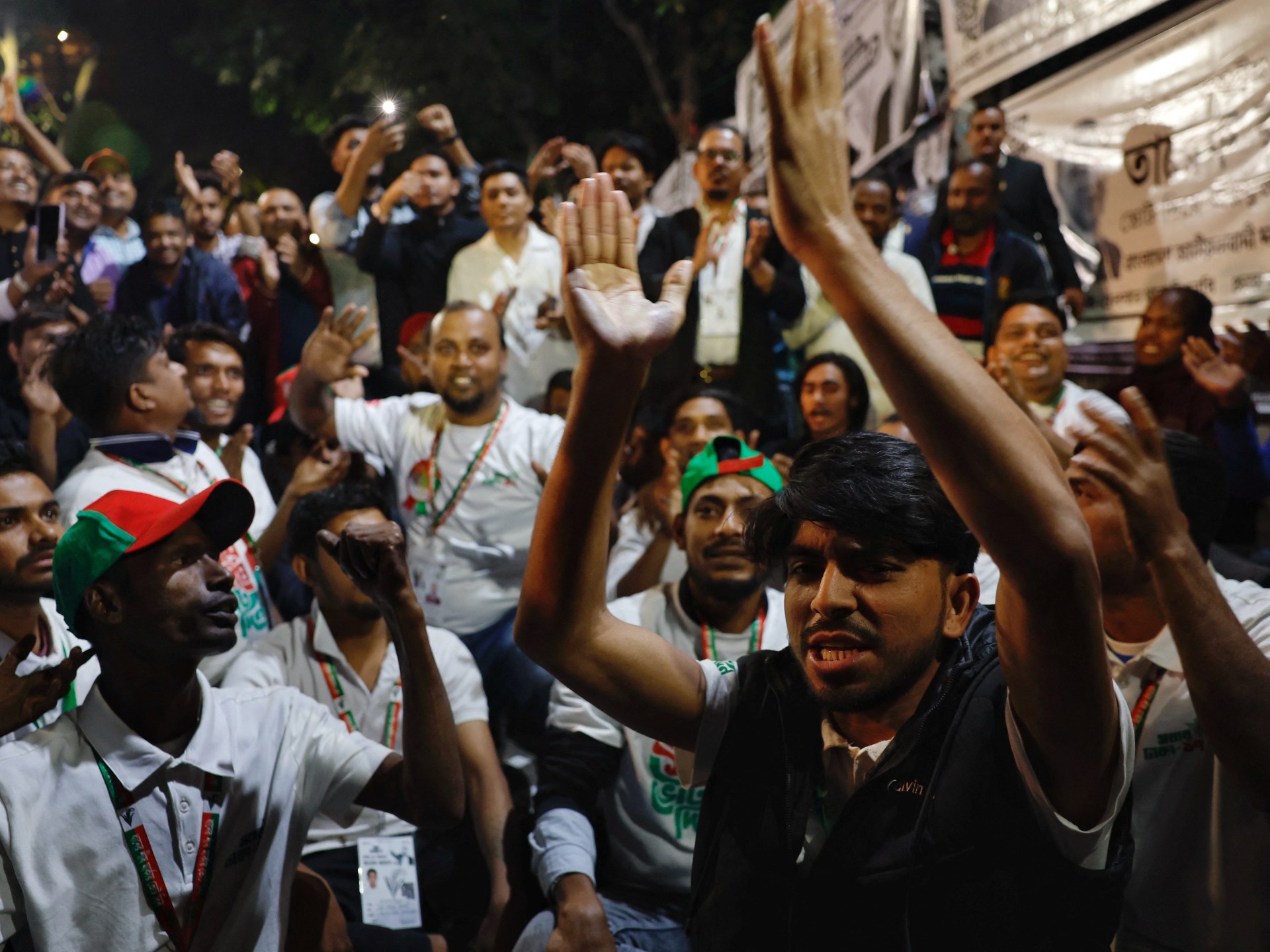

The landmark Bangladesh election held last week was triggered by a Gen Z-led uprising in 2024, yet a youth-led National Citizen Party (NCP) – born out of the uprising – managed to secure only six parliamentary seats out of the 297, the results of which are available.
The results, officially declared on Saturday, showed that voters overwhelmingly chose the long-established Bangladesh Nationalist Party (BNP), which comfortably defeated a Jamaat-e-Islami-led alliance, of which the NCP is a key partner.
- list 1 of 4‘Bangladesh will be better’: BNP victory puts nation at crossroads
- list 2 of 4What does BNP’s landslide mean for Bangladesh’s post-uprising order?
- list 3 of 4Tarique Rahman: From 17-year exile to landslide win in Bangladesh election
- list 4 of 4Why the BNP won Bangladesh’s post-uprising election
end of list
Tarique Rahman of the BNP, which has already governed the country three times, most recently from 2001 to 2006, is set to become prime minister following one of the most consequential elections in the country’s history.
Many young Bangladeshis who voted for the first time described the election as historic, but falling short of their expectations.
“As Generation Z, we didn’t get the expected representation and results after shedding so much blood and losing lives,” student Afsana Hossain Himi told Al Jazeera.
“Still, we are very hopeful. We have representatives from the younger generation, and we hope they will do something good,” she said, referring to the six NCP winners.
Many young Bangladeshis felt the NCP failed to build up a big enough support base in time for the vote.
“They did not live up to the hopes and dreams people had after the 2024 uprising,” 23-year-old university student Sohanur Rahman said. “The NCP’s alignment with Jamaat felt like a betrayal, and many young voters like us chose not to support them.”
Advertisement
NCP spokesperson Asif Mahmud said the party would rebuild itself in opposition and focus on local government elections due in a year.
The South Asian country of 173 million people has one of the world’s youngest populations, with approximately 44 percent of its vote bank – 56 million – between the ages of 18 and 37.
The election outcome is widely seen as a chance to restore stability after months of upheaval that followed the 2024 uprising, which toppled Prime Minister Sheikh Hasina. Security forces at the time, acting on her orders, killed more than 1,400 people, according to the United Nations. Hasina has since been handed a death sentence in absentia for the crackdown.
Hasina, currently living in exile in New Delhi, and Rahman’s mother, Khaleda Zia, have for decades towered over the country’s political landscape. Rahman’s father, Ziaur Rahman, a key figure in Bangladesh’s independence struggle, also led the nation from 1977 until his assassination in 1981.
Rahman, who is likely to be sworn in on Tuesday, has pledged that his administration will prioritise the rule of law.
“Our position is clear. Peace and order must be maintained at any cost. No wrongdoing or unlawful activity will be tolerated,” he said at a news conference on Saturday. “Regardless of party, religion, race, or differing opinions, under no circumstances will attacks by the strong against the weak be accepted. Justice will be our guiding principle.”
Shakil Ahmed, a government and politics professor at Jahangirnagar University, said the Jamaat-NCP alliance pushed away young voters who had wanted a new political class after the fall of Hasina.
“Many saw it as a retreat into old politics rather than a break from it,” Ahmed said. “This decision divided the youth vote and strengthened support for the BNP under Tarique Rahman, which appeared more organised and capable of governing.”
However, for student Farhan Ullash, the vote felt like a long-awaited break with the past.
“After all, the election was a kind of dream for us, a new beginning for Bangladesh,” he said. “I know already BNP is going to make the government. I hope they will listen to us.”
Related News

Italy’s Meloni condemns anti-Olympics protesters in Milan

A vote for continuity? What to know for Costa Rica’s presidential election

Japan snap election: Who’s standing and what’s at stake?