
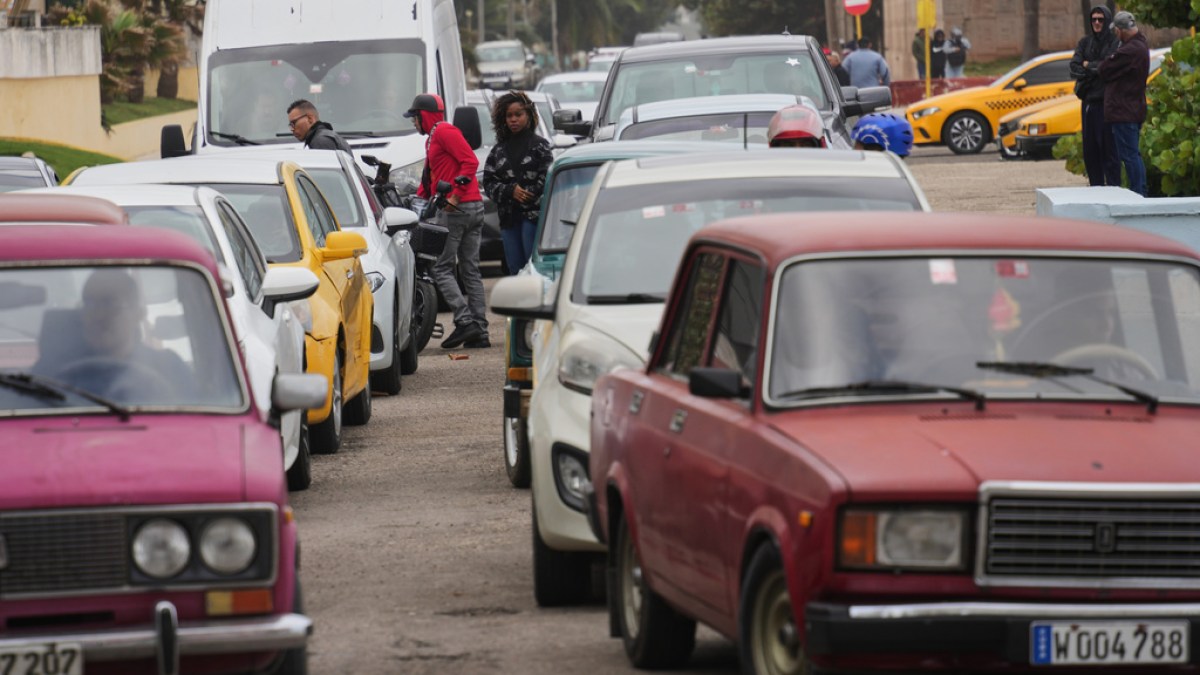

Cuban diplomat Carlos de Cossio has accused the United States of imposing collective punishment on his country as the administration of President Donald Trump ramps up pressure to choke the Caribbean island’s access to oil.
In a post on X on Friday, de Cossio, who serves as Cuba’s deputy foreign minister, described the situation from Havana’s perspective.
- list 1 of 3Beyond pressure: What is the Trump administration’s endgame in Cuba?
- list 2 of 3Mexican ships arrive in Cuba with humanitarian cargo amid US oil blockade
- list 3 of 3Protesters march in Venezuela as National Assembly weighs amnesty bill
end of list
“To be clear: a. Cuba requires importing fuel. b.The US is applying threats & coercive measures to any country that provides it. c. Lack of fuel harms transportation, medical services, schooling, energy, production of food, the standard of living. d. Massive punishment is a crime,” he wrote.
The Fourth Geneva Convention says that “collective penalties and likewise all measures of intimidation or of terrorism are prohibited” under international law.
Cuba relied heavily on oil imports from Venezuela, which have been cut off after the abduction of the country’s leader, Nicolas Maduro, by US forces last month.
After the fall of Maduro, Cuba turned to Mexico for fuel.
But the White House has threatened to impose “additional tariffs on imports from any country that directly or indirectly provides oil to Cuba”.
The Mexican government halted the oil supplies to Cuba after the Trump administration’s threat.
But on Thursday, Mexico sent two ships loaded with humanitarian aid to Cuba.
The US oil blockade comes as the Trump administration pursues a policy of regional dominance over the Americas.
The White House said in its National Security Strategy last year that Washington’s goal is to “restore American preeminence in the Western Hemisphere”.
Advertisement
With Maduro gone, many foreign policy hawks in the US see a golden opportunity to topple the Cuban government.
Washington has had hostile relations with Havana since the rise of the late President Fidel Castro after the communist revolution that overthrew US-backed repressive leader Fulgencio Batista in 1959.
Trump has argued that the Cuban government is “ready to fall” on its own without access to Venezuelan oil.
Last month, the White House released a memorandum labelling the Cuban government an “unusual and extraordinary threat” to the US.
For its part, Havana has issued defiant statements against the US while also expressing willingness to engage in diplomacy.
“The Cuban people and the American people benefit from constructive engagement, lawful cooperation, and peaceful coexistence,” the Cuban Ministry of Foreign Affairs said in a statement on February 2.
“Cuba reaffirms its willingness to maintain a respectful and reciprocal dialogue, oriented toward tangible results, with the United States government, based on mutual interest and international law.”
But days earlier, Carlos de Cespedes, Cuba’s ambassador to Colombia, told Al Jazeera that his country will not accept being “terrorised” by US pressure.
“It will not subjugate us or break our determination even if a single drop of oil doesn’t reach us,” he said.
Last month, Cuba’s President Miguel Diaz-Canel said his country is “ready to defend the Homeland to the last drop of blood”, but he has also said that the island is not a threat to anyone and is open to talks with the US.
Related News
Canada, France to open consulates in Greenland amid ongoing US threats
Thousands gather in Libya for funeral of Saif al-Islam Gaddafi
Musk merges SpaceX and xAI firms, plans for space-based AI data centres