
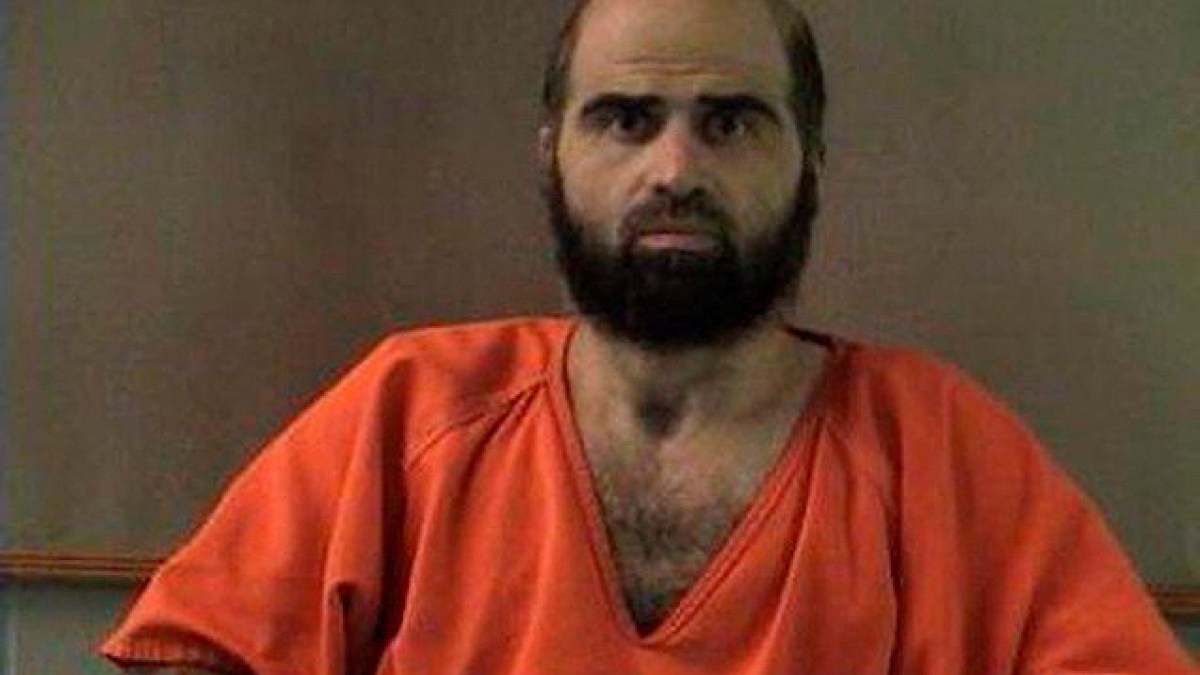

The Pentagon has said it will livestream the upcoming execution of convicted mass shooter Nidal Malik Hasan by firing squad – a first for the United States.
A Pentagon spokesperson made the announcement on Thursday, drawing uproar from legal quarters as experts and rights groups raised concerns that it could violate US and international laws and, in particular, put minors at risk.
- list 1 of 4Trump approves firing squad execution for Fort Hood attacker Nidal Hasan
- list 2 of 4Hegseth says firing squad execution of Fort Hood shooter will be ‘public’
- list 3 of 4Fort Hood shooter to be executed by firing squad: All to know
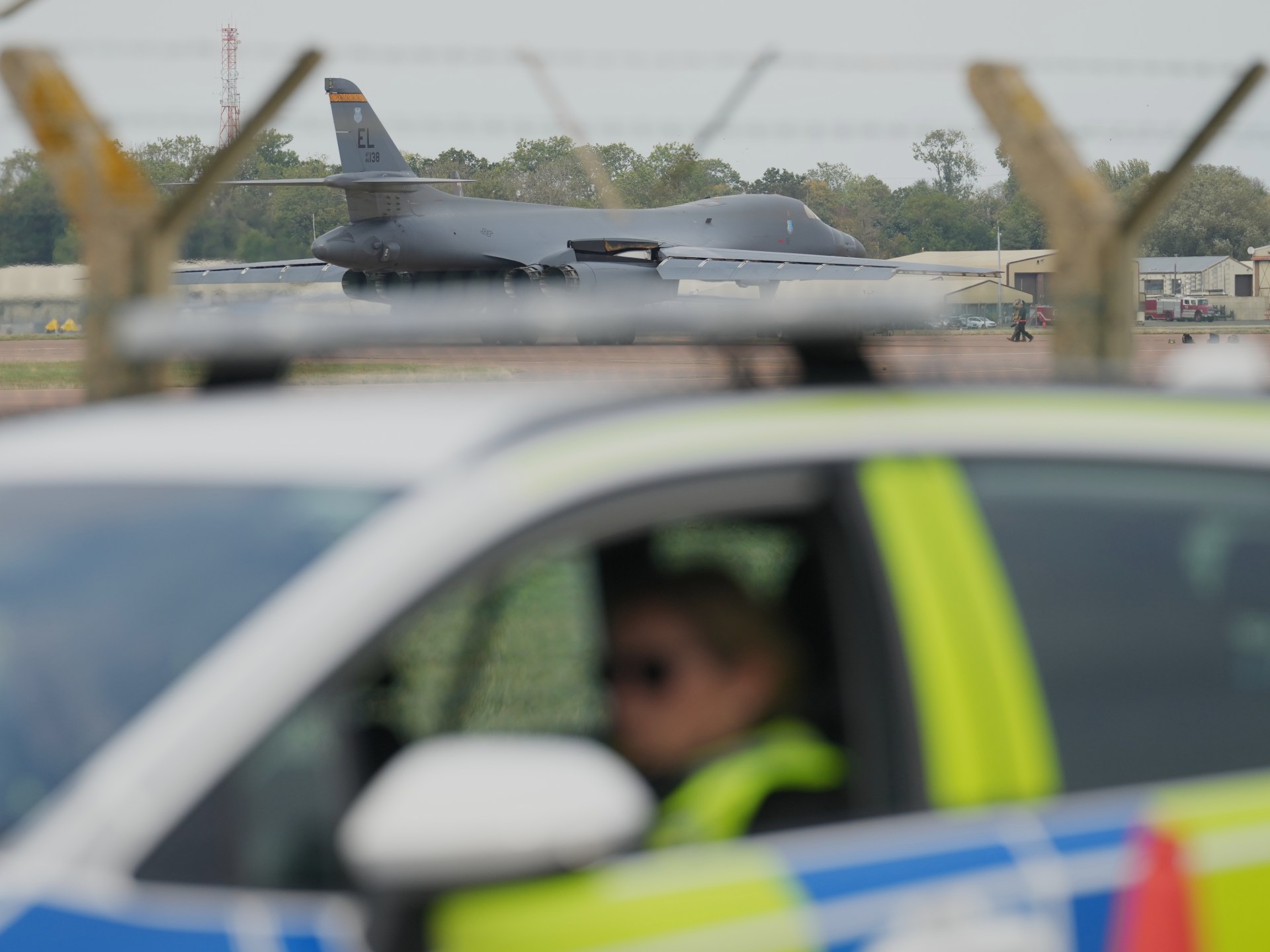
- list 4 of 4Police probe ‘terror’ incident near RAF base used in Iran war: What we know
end of list
The US military rarely invokes capital punishment, last executing an officer by hanging in 1961. Firing squads are even rarer, and were last used in the military in 1945.
Here’s what we know:

What was Hasan convicted of?
Nidal Malik Hasan, a then-Army major, opened fire at an Army processing centre in Fort Hood, Texas, on November 5, 2009, killing 13 people and injuring 32 others.
An Army psychiatrist found he was acting in an effort to stop military deployments to Afghanistan and to halt the killing of fellow Muslims. Hasan was himself scheduled to be deployed later that month.
Following a lengthy military trial in which Hasan made little effort to defend himself, a jury convicted him in July 2013 of 13 counts of premeditated murder and 32 counts of murder, and imposed the death penalty.
Although he said he acted on religious grounds and was found to have corresponded with al-Qaeda-linked elements, Hasan was not convicted of “terrorism” as the US military justice code does not have a stand-alone charge for it.
Advertisement
This week, the Pentagon said US President Donald Trump had given the go-ahead for Hasan to face a firing squad. The military requires presidential approval for executions, and only the president can stipulate a particular method.
When and where will Hasan be executed?
On Thursday, a Pentagon official said Hasan was to be executed at the same Fort Hood military base where he killed 13 people in 2009.
The official said the execution would be livestreamed.
Acting Secretary of the Army Adam Telle set the execution date for December 3 at 1pm local time (18:00 GMT).
What has Hegseth said?
Speaking in a podcast interview this week, Hegseth said the livestream would act as a deterrent.
“We’ll make sure that people are able to watch it, that it’s public, because people need to understand that there’s serious consequences for these types of things,” Hegseth said during the interview with far-right podcaster Jack Posobiec.
He added that the timing of the execution was symbolic. “We’re going to do it at one o’clock, which is when he did it, and it’s going to be soldiers with rifles executing the firing squad.”
Who normally attends executions?
The rules vary in the 27 US states where death penalties are still in place.
Texas law allows up to five close relatives of the victim, a spiritual guide, justice officials, state-ordained chaplains, a judge, the sheriff, and the media to attend an execution.
All persons, however, must be adults older than 18.
When was the last public execution in the US?
It was on August 14, 1936. Rainey Bethea was publicly hanged in Owensboro, Kentucky, after confessing to the rape and killing of 70-year-old Lishia Edwards.
The US is a signatory to the International Covenant on Civil and Political Rights (ICCPR), which bans torture, cruel, inhuman, or degrading punishment.
While the convention does not completely ban the death penalty, it does strictly restrict its use to the “most serious crimes” and encourages its abolition.
Washington ratified it in 1992, but it issued reservations and stated that the US would retain the right to impose capital punishment as it sees fit.
Legal experts say the public execution of Hasan could violate the clause against degrading punishment under the convention. A livestream would likely also be recorded and shared widely.
British-American human rights lawyer Clive Stafford Smith, who has represented clients on death row in the US and founded the Louisiana Capital Assistance Center in New Orleans in 1993 to represent low-income individuals facing the death penalty, called the move “barbaric”.
Advertisement
He said a public execution broadcast in this manner would violate several laws in the US that prohibit the transmission of obscene, indecent, or graphic material, especially to minors.
There’s no single federal law stipulating who may witness executions, but death penalty states typically prohibit minors.
Likewise, the Army’s justice code (PDF) prohibits minors from witnessing an execution.
“I’ve watched six executions, and I suffer from PTSD [post-traumatic stress disorder] to this day,” Stafford Smith told Al Jazeera. “It’s a nightmare, and you’ll have people who will have traumatic responses to it.”
Smith said several legal challenges are likely, and the Army will likely have to consider several factors if it does go ahead with broadcasting the execution.
Challengers are likely to question how the US military will prevent children from viewing the livestream, and how they will make Hasan’s shooting less ghastly based on the body parts targeted, he said.
Regarding using the public execution as a deterrent, Stafford Smith added the opposite could actually be more likely. He said it could end up “provoking more cases” and that Hasan could be seen as a “martyr” by some.
He added: “This is likely going to Congress. The Democrats will want to stop this. So that will be an interesting battle.”
How have politicians and rights groups responded?
Democrat Senator Chris Murphy called the move “disgusting” and compared it to executions carried out by the Islamic State (ISIL). “I understand that in this country we have the death penalty, but public executions [are] medieval,” he said in an interview with CNN.
Amnesty International Australia said Hegseth’s statements showed an “appalling disregard for human dignity”, and called on Melbourne to intervene.
Meanwhile, New Zealand’s national censor told rights groups urging it to protest that it has no authority to block internet users from viewing the livestream – a sign that governments attempting to restrict access might be hampered.
Related News
Photos: Kashmir’s Dal Lake faces environmental and climate challenges
Israeli forces arrest dozens of Palestinians in occupied West Bank raid
Yemeni forces say they repel Houthi attacks in Taiz as fighting rages