

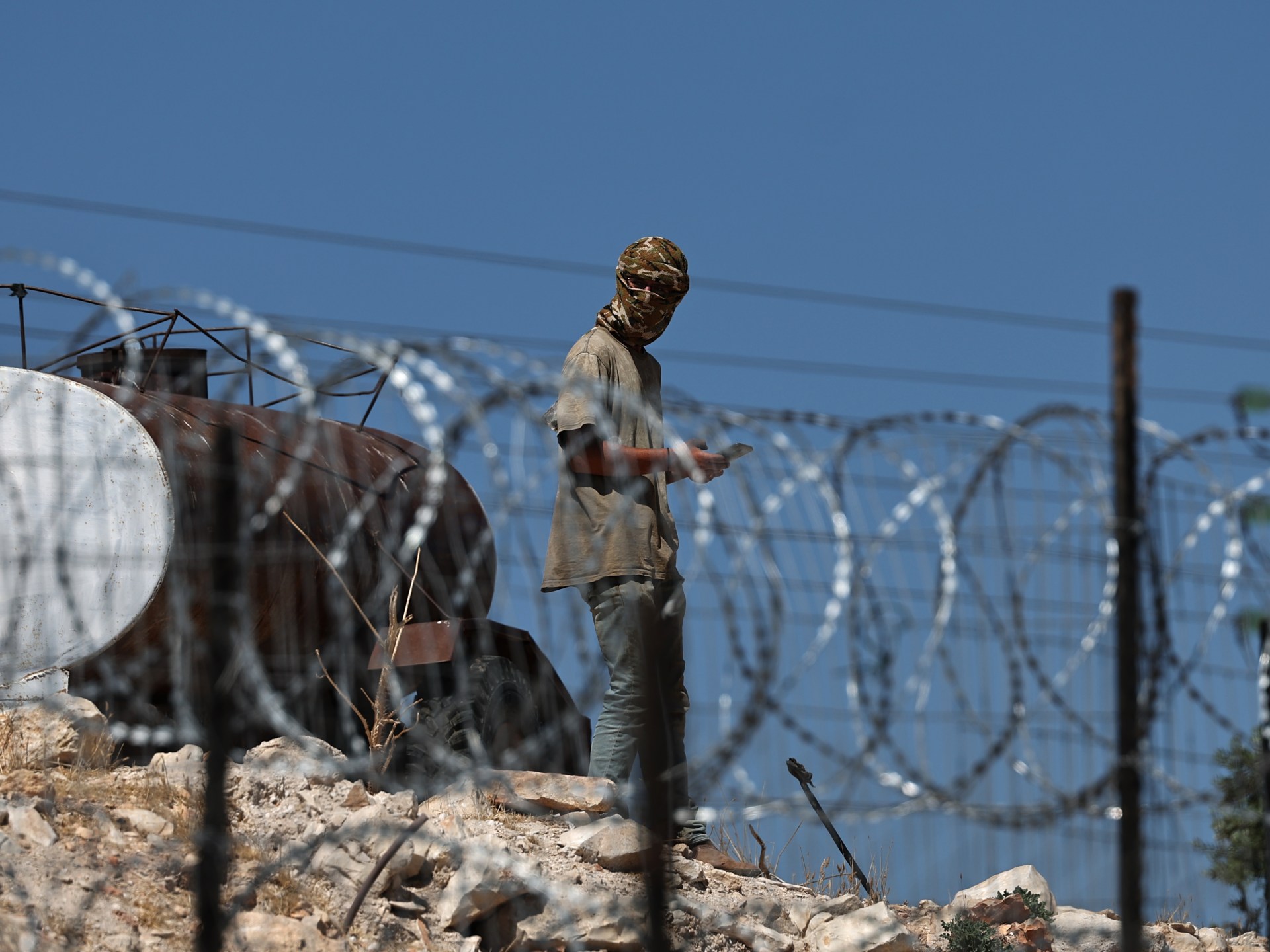

This past week, a flurry of Western countries announced forthcoming sanctions on Israel – limited, for now, to its illegal settlements in the occupied West Bank. Israel’s response was swift and aggressive: on September 9, it gave the United Kingdom 30 days to close its consulate in occupied East Jerusalem.
As Israel hardened its international defiance, such diplomatic moves did little to slow the dispossession of Palestinian land and identity in Jerusalem and the West Bank, as well as the ongoing killings and deterioration of basic conditions in Gaza.
- list 1 of 3Private schools become a costly choice for struggling parents in Gaza
- list 2 of 3How Israel systematically dismantles Palestinian life in occupied West Bank
- list 3 of 3Burnham must establish an inquiry into Britain’s role in the Gaza genocide
end of list
Such efforts can be difficult to grasp as a single, coordinated process. But a newly released B’Tselem report attempts to do exactly that, describing the overarching colonial system as being driven by aspirations of “elimination” – “the sustained undermining of the conditions that allow Palestinians to exist as an independent collective with land, institutions, language, culture, social ties, leadership, shared memory and history and a social and political horizon”.
International sanctions prompt aggressive Israeli response
Twelve countries, including the UK, France and Canada, announced on September 8 that they would introduce, support, or consider restrictions on Israeli settlement goods, with Britain’s Foreign Secretary Ed Miliband telling parliament that the government could no longer “stand by” in the face of what he called “ethnic cleansing of Palestinians… perpetrated by settler terrorists”.
Israel retaliated within 24 hours, ordering the UK consulate’s closure, ending British training of Palestinian Authority security forces, removing British staff from the Gaza coordination centre in Kiryat Gat and barring 12 British public figures – including 11 members of parliament.
Advertisement
Israel’s aggressive targeting of perceived detractors turned within as well, as Israeli Culture Minister Miki Zohar said he would move to revoke the citizenship of filmmakers Yuval Abraham and Rachel Szor. That is after their documentary “NAZA”, which highlights Israel’s use of AI targeting systems in Gaza, won a Special Jury Prize at Venice and received a 25-minute standing ovation. Zohar called the film “vile” and accused its makers of “treason”.
Gaza: a week of attacks amid a health system nearing collapse
Visiting Ireland this week, US President Trump insisted “there’s very little happening right now in Gaza”. Every day this week told a different story: attacks on Palestinians added to the Strip’s ever-increasing death toll and its already widespread destruction, as humanitarian conditions worsened unabated.
Israeli Finance Minister Bezalel Smotrich said on September 12 that if European countries took in 20,000 to 30,000 Gaza residents each, “this entire issue would be over”. With no such mass ‘emigration’ materialising yet, airstrikes on Gaza continued on a daily basis.
Following two days of multiple air raids on Gaza wounding women and children, on September 10, Israeli warplanes killed a family of four – father, mother and their two daughters – in the Beit Lahia housing project. Israel alleged the father was involved in attacks. This was followed the next day with a drone strike near the Sumoud camp in Khan Younis, killing Jihad Ismail, 33, and wounding 12 others.
On September 12, a pregnant woman, Iman Shalouf, 27, died from wounds sustained days earlier by Israeli gunfire south of Khan Younis. The next day, an air strike on a vehicle in Gaza City’s Tal al-Hawa neighbourhood killed two Palestinians and wounded 13. On September 14, a Palestinian was killed by Israeli gunfire in the al-Mawasi area of Rafah. On the same day, Gaza’s Ministry of Health put the cumulative toll since October 2023 at 73,786 killed and 174,771 wounded, with 1,372 killed since last October’s “ceasefire”.
Meanwhile, Gaza’s health and transport systems edged closer to collapse. Al-Ahli Arab Hospital said its main generator failed because of a lack of oil and spare parts. That suspended its imaging department – including the only functioning CT scanner in northern Gaza. On September 13, Gaza’s public bus operators’ union said it would suspend transport for doctors and nurses beginning on September 16 due to the lack of replacement parts and fuel; the Health Ministry called it “a death sentence” for patient care.
Advertisement
The latest data from the UN’s Office for the Coordination of Humanitarian Affairs (OCHA) found that since March, only 13,445 litres of engine oil have been approved by Israel for entry in Gaza against nearly 93,000 pending – oil needed to keep water, sanitation and hospital generators running.
‘De facto annexation’
The diplomatic rupture over settlements was matched this week by a convergence of reports from NGOs and international bodies reaching similar conclusions about conditions in the West Bank.
Israeli rights groups Yesh Din, Bimkom and HaMoked concluded in a joint report that land seizures, settler violence and movement restrictions “form a continuous process” amounting to “de facto annexation.” The B’Tselem report describes “the growing role of settler militias operating in coordination and cooperation with official forces”, working towards the same end even when not literally acting together. This week’s daily incidents put those dynamics on display.
On September 12, in Faqua, near Jenin, a soldier was filmed shooting Qassem Hussam in the leg during a settler incursion onto Palestinian land – an incident Israeli army radio itself said was carried out “contrary to orders” against a man who “posed no threat”, as the ongoing pogrom against Palestinians in the West Bank continued.
A similar pattern played out on September 11, when Palestinian field activists reported that settlers beat five men with metal pipes on the Ramallah-Jericho road, fracturing one man’s knee; no soldiers intervened, though the road runs through an area with a heavy army presence.
Elsewhere, it was Israeli forces carrying out the violence. On September 13, Israeli forces shot and wounded two Palestinian labourers in Beit Jala, according to WAFA. On September 14, forces wounded a young man in Beit Ula, near Hebron, while setting his vehicle on fire, and separately arrested men in Beit Ummar and Dura, according to WAFA.
Related News

Israeli man wounded in stabbing in occupied West Bank
Hamas condemns ‘new war crime’ as Israel kills 10 in crowded Gaza hubs
Fighting continues between Yemen gov’t forces, Houthis: What is the latest?