

Argentina’s Senate has approved labour reforms backed by President Javier Milei that relax hiring rules, allow for longer working days and impose new limits on the right to strike, prompting renewed protests over the government’s austerity policies.
The Senate approved the so-called “labour modernization law” on Friday with 42 votes in favour, 28 against and two abstentions, handing the libertarian president one of his most significant legislative wins.
- list 1 of 3US jobless claims slow in last full week of 2025 amid weak labour market
- list 2 of 3Thousands of nurses go on strike in New York City
- list 3 of 3Struggling to get by: Behind the US underemployment crisis
end of list
Milei’s administration argues the changes will spur investment and create formal jobs, while labour unions contend they weaken worker protections.
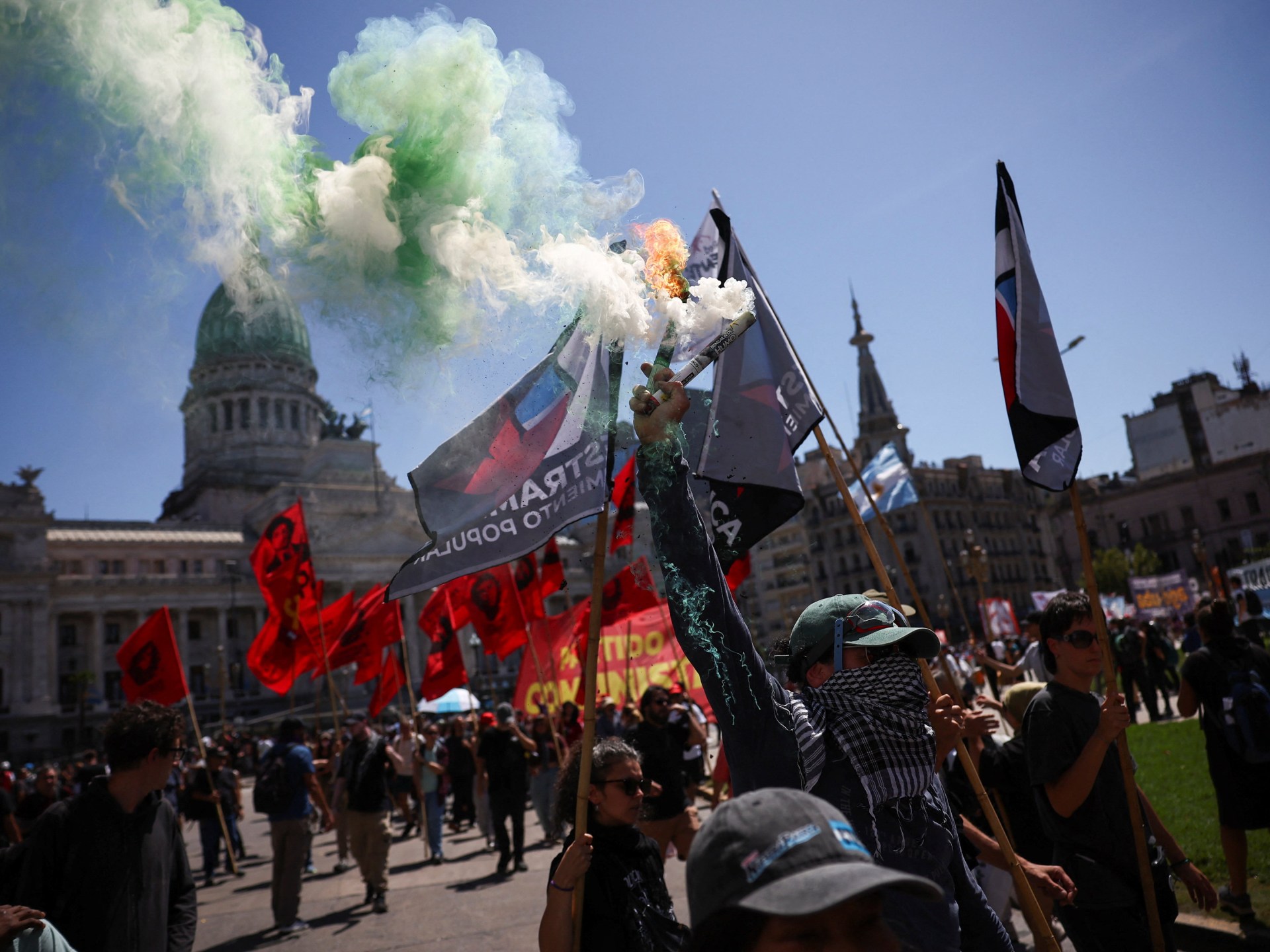
The bill has brought thousands of people onto the streets over the past two weeks in protest against what they see as a rollback of their labour rights.
Two protests outside parliament ended in clashes between the police and protesters, but a third on Friday saw only minor disturbances.
Polls show Argentinians are divided on the reforms, with 48.6 percent in favour and 45.2 percent against, according to a recent survey.
Sergio Emiliozzi, a 60-year-old teacher, told the AFP news agency that while the law was being promoted as a job creation tool, “it’s quite the opposite,” adding, “What this allows is for me to be easily fired.”
Unions also object to new limits on the right to strike that require essential services to maintain minimum operations during work stoppages.
Supporters, meanwhile, argue that the changes are essential to boost productivity, attract foreign investment and limit labour lawsuits.
Advertisement
They have also praised provisions that offer new tax incentives for hiring and pathways to legally register Argentina’s large population of informal workers.
The reforms also relax hiring rules, change the vacation system, allow the standard workday to be extended from eight to 12 hours, and permit salaries to be paid in foreign currency.
The bill’s passage is seen by analysts as a sign that Milei has the political backing to advance his broader free-market agenda.
Since taking office, he has stabilised the exchange rate and cooled inflation, bringing monthly price increases down from double digits to 2.9 percent in January, gaining accolades from the International Monetary Fund.
But the austerity measures have deeply affected Argentinians, causing severe economic duress for many.
Related News

Tracking the rapid US military build-up near Iran

Trump suggests Iran has 10 days to reach agreement with US

Calls for justice grow after Israeli settlers kill another US citizen