
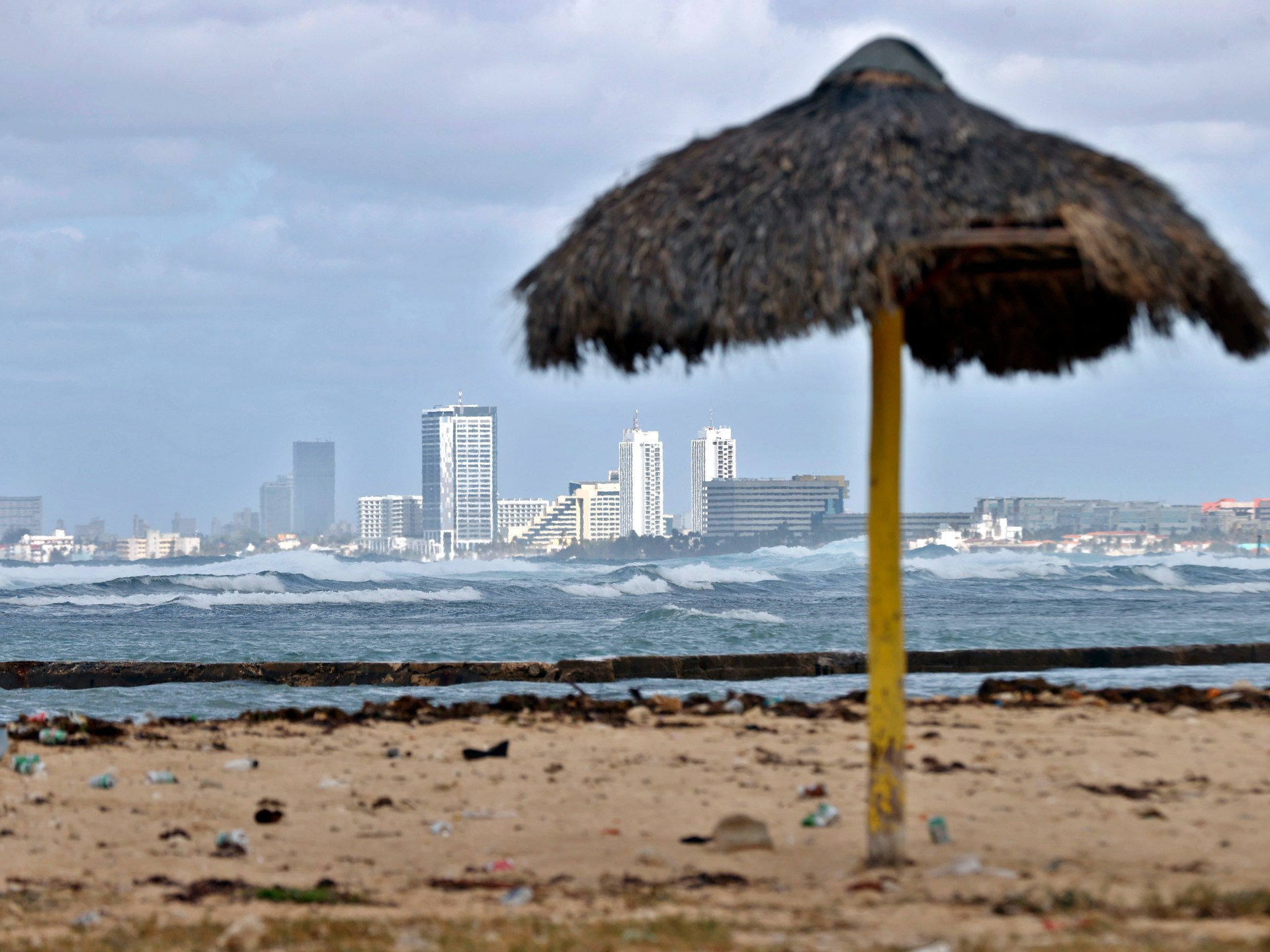

Cuba’s Ministry of the Interior (MININT) has announced that its border patrol forces engaged in a shootout with a speedboat from the United States, killing four people.
In a statement published on social media, the Cuban government described the boat as having a license plate from the state of Florida, a peninsula roughly 145 kilometres, or 90 miles, from the island.
It also accused the speedboat of firing the first shot, precipitating an exchange of gunfire.
“The crew of the violating speedboat opened fire on the Cuban personnel, resulting in the injury of the commander of the Cuban vessel,” the statement said.
“As of the time of this report, four aggressors on the foreign vessel were killed, and six were injured.”
It is so far unclear what activities the speedboat was engaged in, and the identities of those on board remain unknown.
But Wednesday’s incident is not the first time that the Cuban government has engaged in a gunfight after allegedly intercepting US boats entering its territory.
Still, the latest example could prove to be particularly contentious, given the heightened tensions over the last two months between the US and Cuba.
An investigation into Wednesday’s incident remains ongoing. The Interior Ministry, however, framed the the border patrol’s actions as part of its larger defence of Cuba’s national sovereignty.
“In the face of current challenges, Cuba reaffirms its determination to protect its territorial waters, based on the principle that national defense is a fundamental pillar of the Cuban State in safeguarding its sovereignty and ensuring stability in the region,” the ministry wrote.
Advertisement
That latest incident took place on Wednesday morning, offshore from the barrier island Cayo Falcones in the north-central Villa Clara province.
The shootout comes at a delicate time for Cuba’s international relations, as it becomes increasingly isolated — and as the US threatens military action in Latin America.
One of Cuba’s closest regional allies, for instance, has seen upheaval at the hands of US forces. On January 3, US President Donald Trump authorised an early-morning military operation to abduct then-President Nicolas Maduro, transporting him to the US for trial.
Shortly after the attack, Trump and his officials issued statements suggesting they would welcome the fall of Cuba’s communist government.
“Look, if I lived in Havana and I was in the government, I’d be concerned,” US Secretary of State Marco Rubio, a longtime anti-Cuba hawk, told reporters.
Trump, meanwhile, was more blunt. “Cuba looks like it’s ready to fall,” he said in the immediate aftermath.
In the weeks since, the US announced it would cut off supplies of Venezuelan money and oil to Cuba, and on January 29, it imposed an oil blockade on the island, threatening Cuba’s trading partners with sanctions.
This is a breaking news story. More details to come.
Related News
A Palestinian cancer patient stuck in Egypt for two years returns to Gaza
US civil rights leader Jesse Jackson dies aged 84
Russia-Ukraine war: List of key events, day 1,462