A Palestinian cancer patient stuck in Egypt for two years returns to Gaza
 13 February 2026
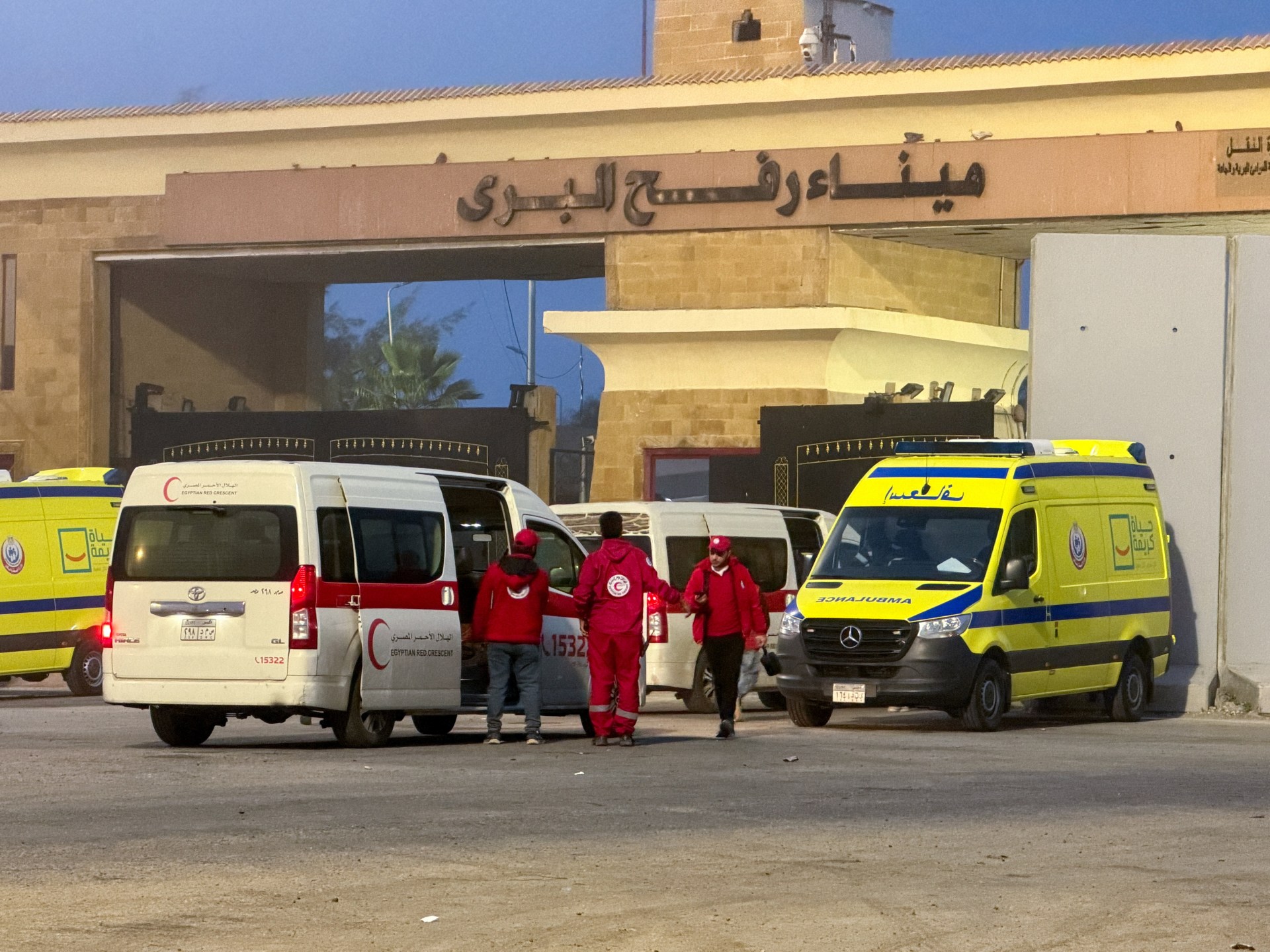

The al-Najjar family gathered at the Nasser Medical Complex in Khan Younis, in southern Gaza, early to await the arrival of their matriarch. They stood shoulder to shoulder, eagerly waiting for the bus.
For nearly two years, they have been counting down the days, amid Israel’s genocidal war, destruction, trauma and mourning, until Mariam could return home via the Rafah crossing.
- list 1 of 3Gaza returnee recalls her journey through the Rafah crossing
- list 2 of 3Elderly Palestinians determined to stay in Gaza despite terrible conditions
- list 3 of 3Israel kills two in northern Gaza as Rafah crossing sees little movement
end of list
“We [the family] feel happy because we will see my mother again,” Mohammad al-Najjar, Mariam’s son, told Al Jazeera’s Hani Mahmoud, reporting from Khan Younis.
The family has suffered heavy losses, like all in Gaza.
“But we are sad because the situation has changed so much,” said Mohammad, adding: “We lost my brother, and our homes – we lost two houses, and there’s nothing left for us.”
Mariam travelled to Egypt for cancer treatment in March 2024, just a few months into Israel’s war, which has killed more than 72,000 people.
Israel seized the Rafah crossing in May 2024, making “what was meant to be temporary become two years of separation”, said Mahmoud.
A vital entry point for humanitarian supplies and exit for Palestinians awaiting medical evacuation, Israel partially reopened the crossing earlier this month, as stipulated under the United States-brokered “ceasefire”, which came into effect in October.
However, Israel has imposed severe caps on the number of travellers permitted to come in and out of the devastated Palestinian enclave, and imposed intensive security checks, with endemic humiliation and interrogation of Palestinians by Israeli forces at the crossing.
Advertisement
Despite prior plans with the World Health Organization (WHO) – the body overseeing coordination between Egypt and Israel – for the departure of 50 patients daily, Israel only allowed five patients to exit Gaza via the crossing on February 2, the first day of its reopening.
As Mariam disembarked from the bus, said Mahmoud, her family rushed forward, greeting her with tears and “an embrace that seemed to erase two years in seconds”.
Mariam said coming back was never in question, even as she watched from afar her family being bombarded and displaced.
“We wouldn’t find another place like Gaza even if we searched the whole world. Even in its destruction, it is worth the whole world,” said Mariam.
This joyful reunion is punctuated by a cold return to reality.
Mariam, who remains weak, remained at Nasser Hospital to receive further treatment while her family returned to their nearby tent shelter.
They are unable to return to their destroyed home, which lies beyond the so-called “yellow line”, the demarcation line – a self-declared buffer zone – where the Israeli army entrenched under the first phase of the “ceasefire”.
The line divides Gaza into two zones: An eastern area under Israeli military control and a western area where Palestinians face fewer movement restrictions but are under constant threat of air attacks and forced displacement. The whole of Gaza remains under harsh Israeli occupation.
While the al-Najjar family has been reunited, “the reality is that this process [of Palestinians returning home via the Rafah crossing] remains limited and tightly controlled,” said Mahmoud.
“Many families are still waiting, separated not just by distance, but by borders, paperwork, and an uncertain timeline.”
Related News
Kosovo’s parliament approves new gov’t ending yearlong political deadlock

US makes arrest in connection with disappearance of TV host’s mother

US strikes civil nuclear agreement with Armenia, Russia’s former close ally