

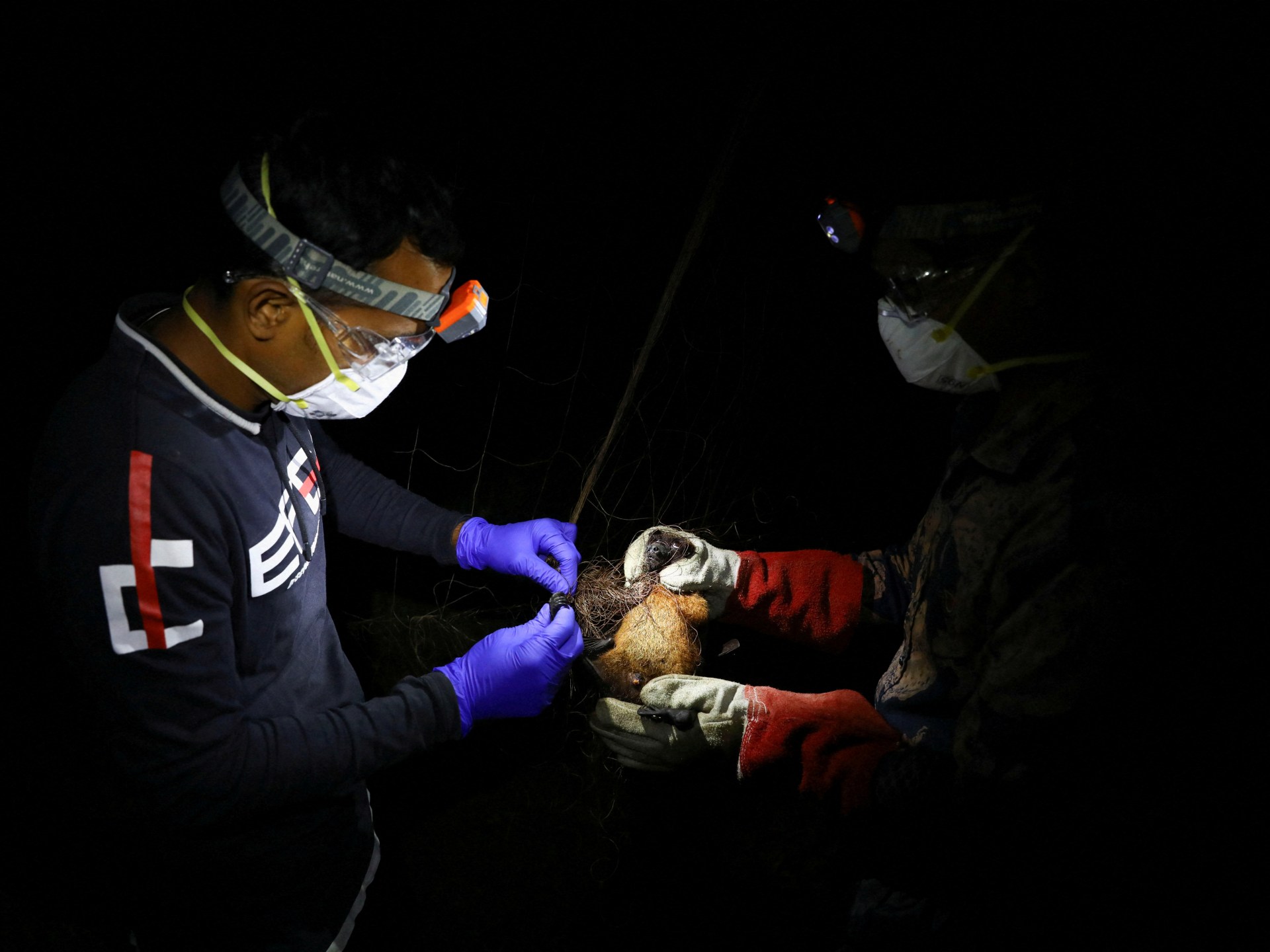

The World Health Organization (WHO) has said that a patient in Bangladesh died after contracting the Nipah virus, adding that it believes the risk of the disease spreading internationally still remains low.
The WHO said on Friday that a patient died after being admitted to hospital on January 28, where a team collected throat swabs and blood samples. Infection with the virus was laboratory-confirmed the following day.
- list 1 of 3What is the Nipah virus and is it spreading in southern India?
- list 2 of 3Region on watch as India declares Nipah virus outbreak contained
- list 3 of 3Why is India’s Nipah virus outbreak spooking the world?
end of list
“On 3 February 2026, the International Health Regulations National Focal Point (IHR NFP) for Bangladesh notified WHO of one confirmed case of Nipah virus (NiV) infection in Rajshahi Division,” the international health organisation said in a statement.
The announcement comes about a week after two cases were confirmed in West Bengal state in eastern India, as authorities work to contain the deadly virus that they say remains largely under control.
An outbreak of the Nipah virus in India’s West Bengal has heightened concerns in China and several Southeast Asian nations, prompting tighter health screening operations at airports, though the WHO said it does not recommend any travel or trade restrictions based on current information.
“WHO assesses the overall public health risk posed by NiV to be low at the national, the regional and global level,” an assessment reads.
“The risk of international disease spread is considered low,” it said.
The WHO said that the patient in Bangladesh, described as a female between the ages of 40 and 50 residing in the Naogaon district, first began experiencing fever and neurological symptoms on January 21. The patient reported no travel history but had recently consumed raw date palm sap.
Advertisement
An additional 35 contact persons have been tested for the virus, with no further cases yet detected.
About 348 Nipah virus cases have been reported in Bangladesh since 2001, about half of which occurred among people with a confirmed history of drinking raw palm sap.
Outbreaks tend to occur on a seasonal basis from the months of December through April, which the WHO says corresponds with the harvest and consumption of date palm sap.
There are currently no licensed medicines or vaccines specific for the infection, and the fatality rate is reported to be high, between 40 percent and 75 percent, among people infected with the virus, according to reports.
In a statement last week, WHO chief Tedros Adhanom Ghebreyesus called Nipah a “rare but serious disease” that authorities are working to counter.
“Authorities have increased disease surveillance and testing, implemented prevention and control measures in health care settings, and are keeping the public informed about how to protect themselves,” Ghebreyesus said.
Related News
Suspected separatists kill 8 Pakistani policemen in ‘coordinated’ attacks

Countries supplying oil to Cuba threatened with US tariffs

Uruguay President Orsi deepens ties with China’s Xi despite Trump threats